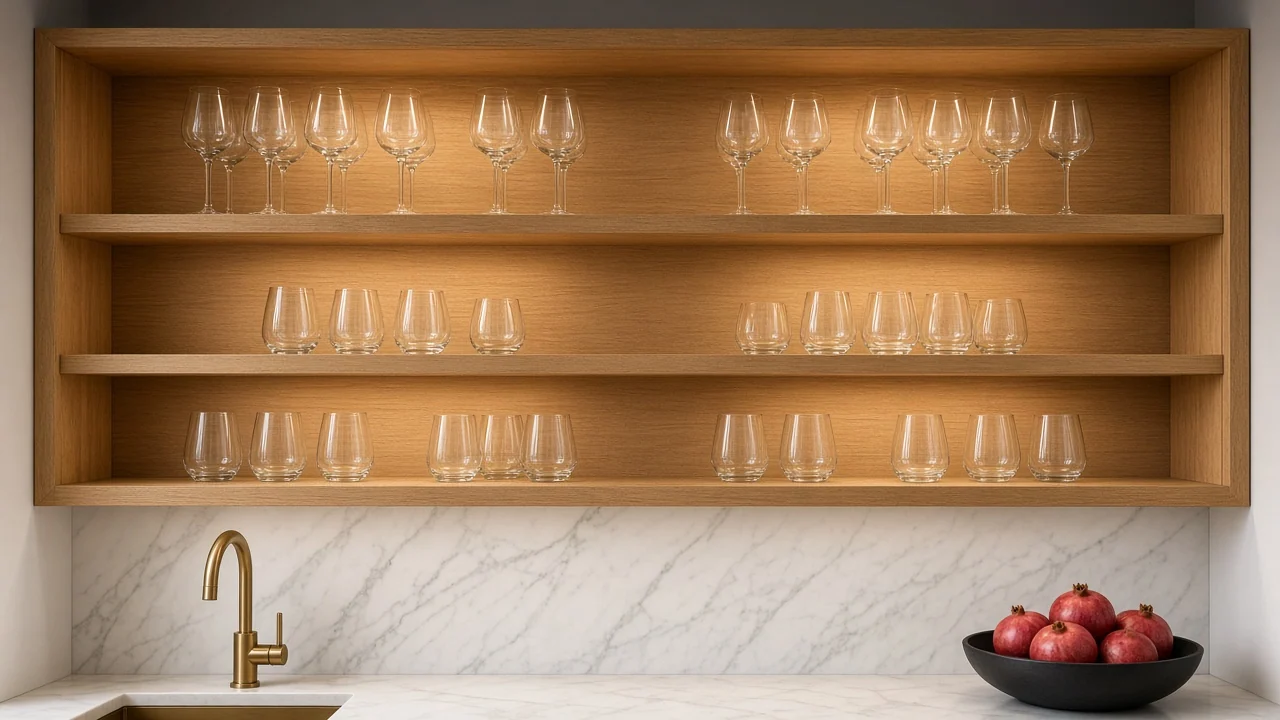
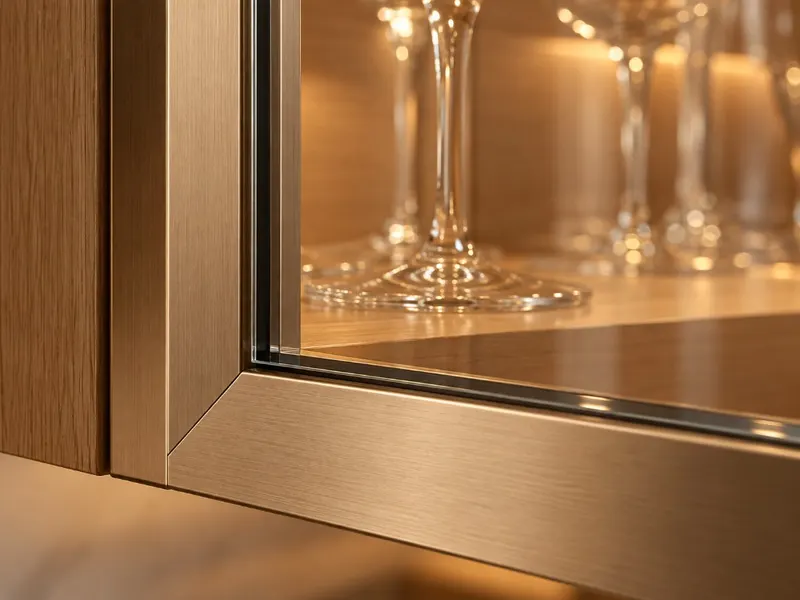
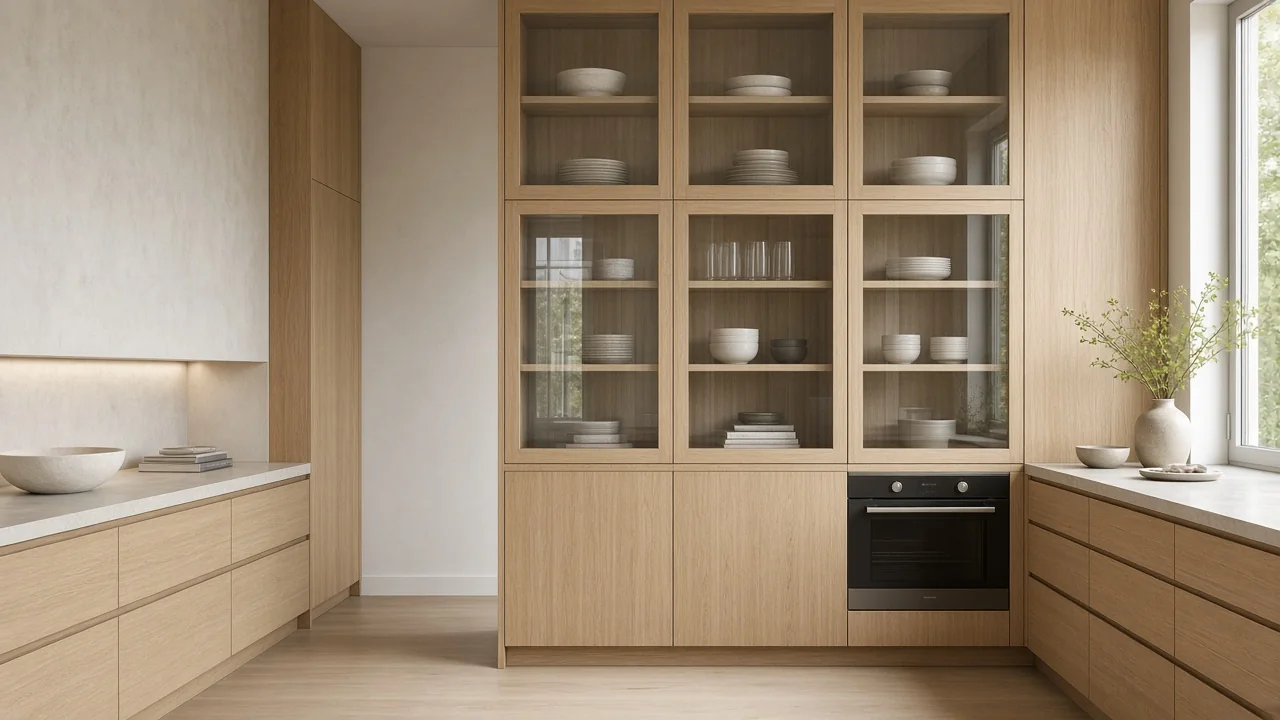
Standard clear glass. The wood and objects stay easy to see, and reflections remain.
A clearer glass with less green at the edge. In thin cabinet glass the difference is subtle and is confirmed with a sample.
A softened face. What is inside becomes light and shape rather than a sharp view.
Fine vertical ribs. The interior stays warm and lit, broken into lines.
A warm brown tint. It deepens the wood and darkens what sits behind the glass.
A neutral gray tint. It quiets the interior without the warmth of bronze.
A soft black aluminum face. This is the starting finish in the study.
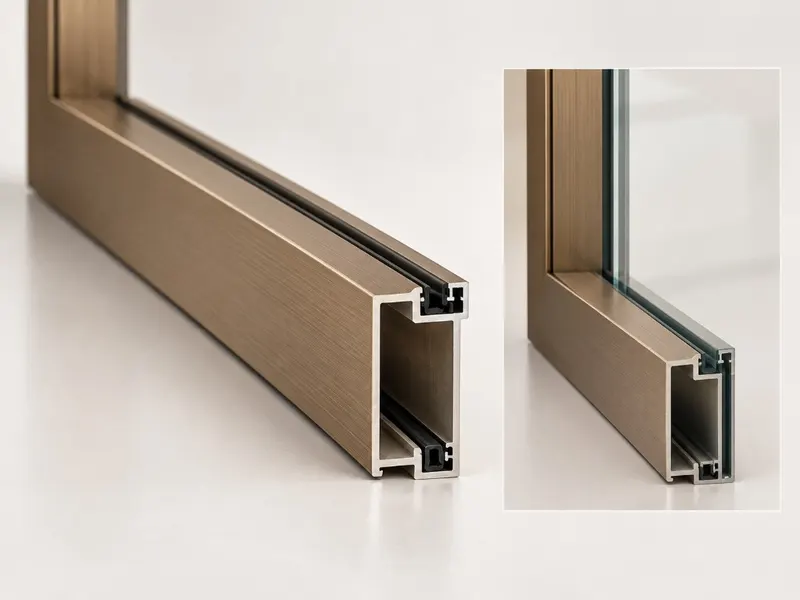
A warm brown metal. Compare it here, then confirm the finish against a sample.
A pale gold aluminum. It stays quiet against light stone and oak.
A cool, linear metal. It reads lighter against the wood.
One pair across the same opening.
Three leaves in the same opening.
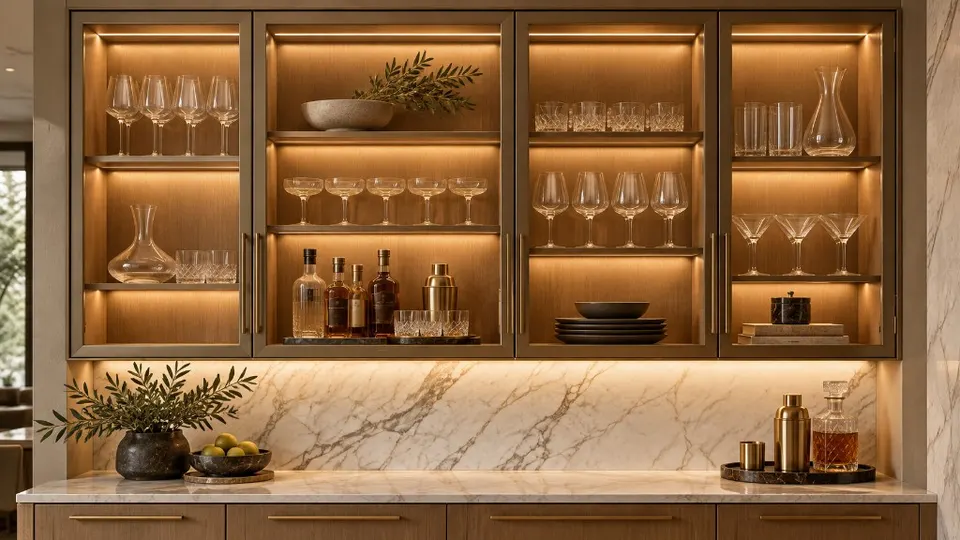
Two pairs. This is the arrangement drawn first.
A slim vertical pull. In this study its finish follows the frame.
A small round knob. In this study its finish follows the frame.
These are design studies on one interior, not a Capital Glass installation and not a price. Glass, frame, hardware, and size are confirmed together before anything is treated as orderable.