
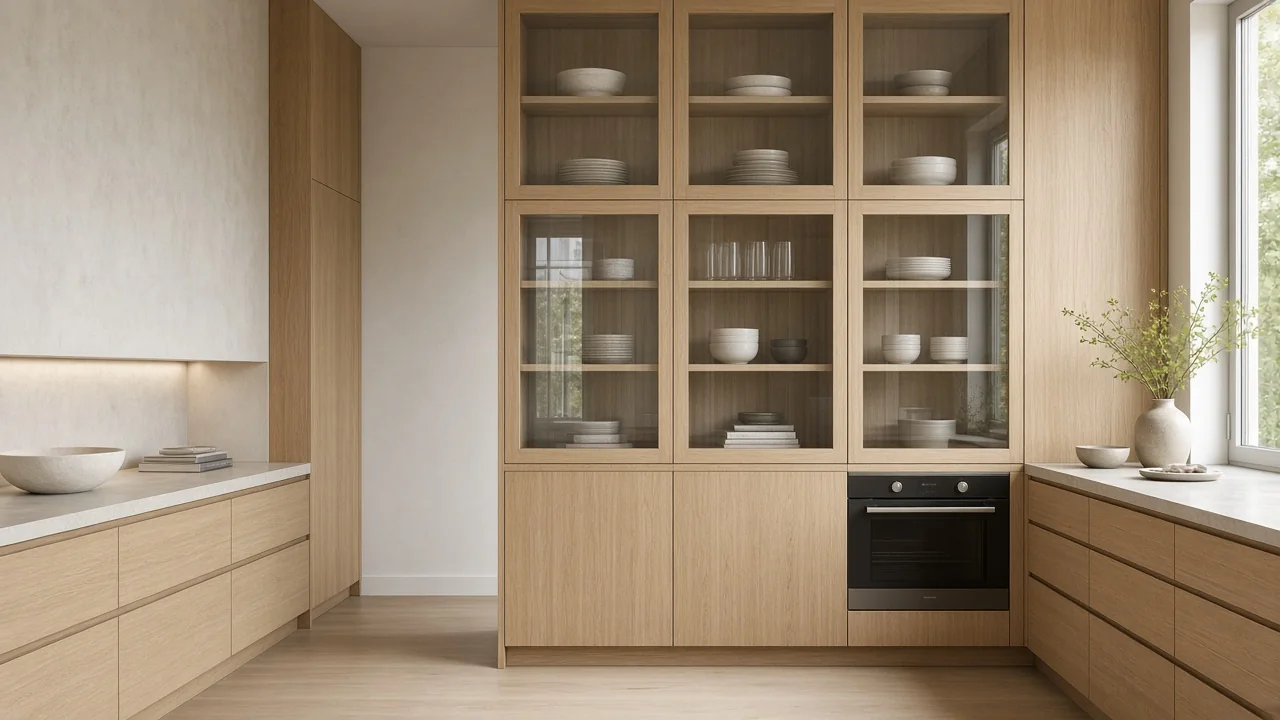
Glass cabinet doors are one of the most effective changes in a kitchen remodel. They turn upper cabinets into display space, bring light into a wall of solid doors, and let a kitchen show off its dishes and glassware instead of hiding them.
The decision that matters most is the glass itself. Clear, seeded, reeded, patterned, and frosted glass all fit the same cabinet door, but they show very different amounts of what is behind them. This guide compares the five, then covers thickness, framing, installation, and what to send for a quote in the Houston area.
The same shelf behind five glass types
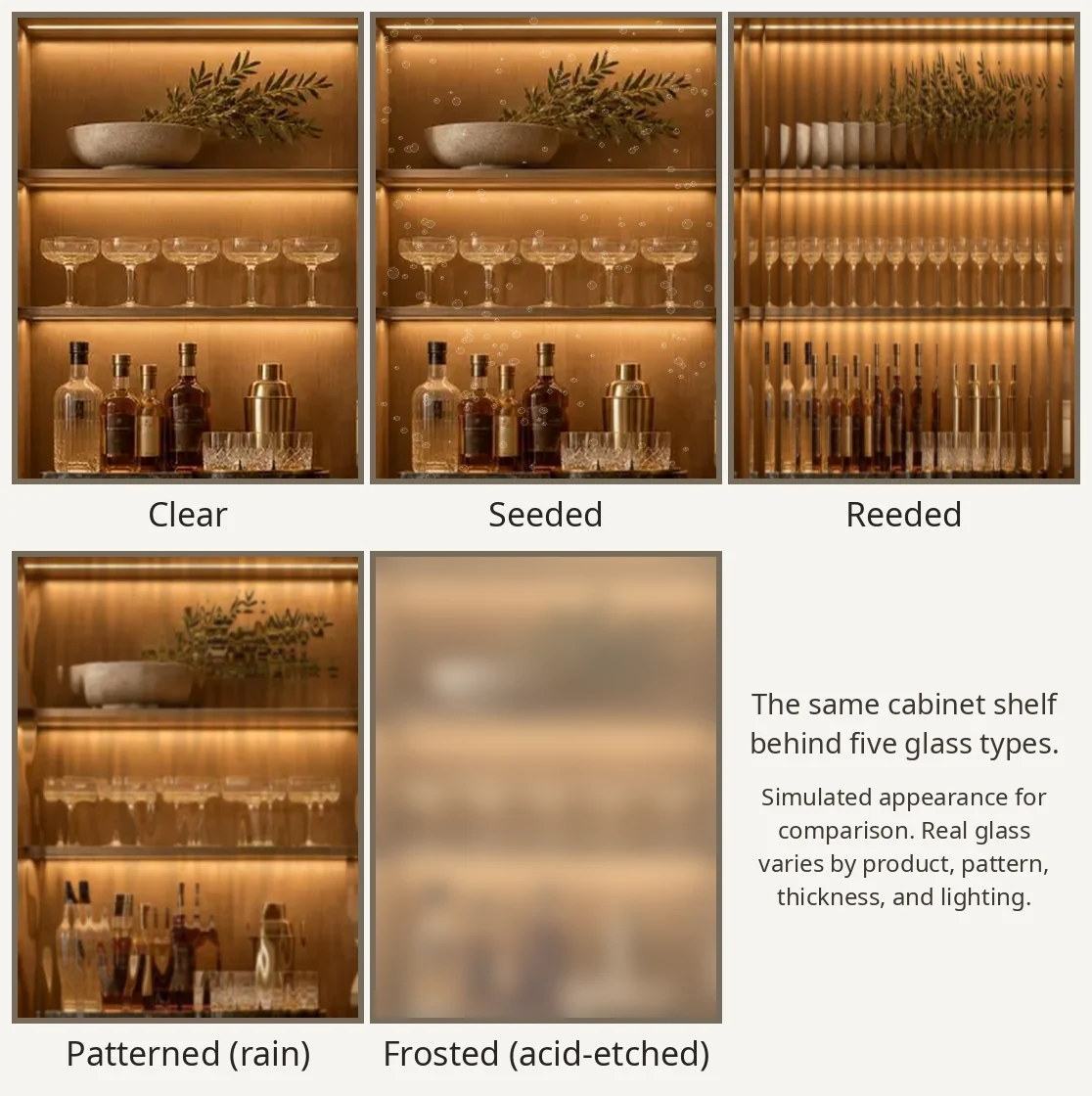
Clear glass
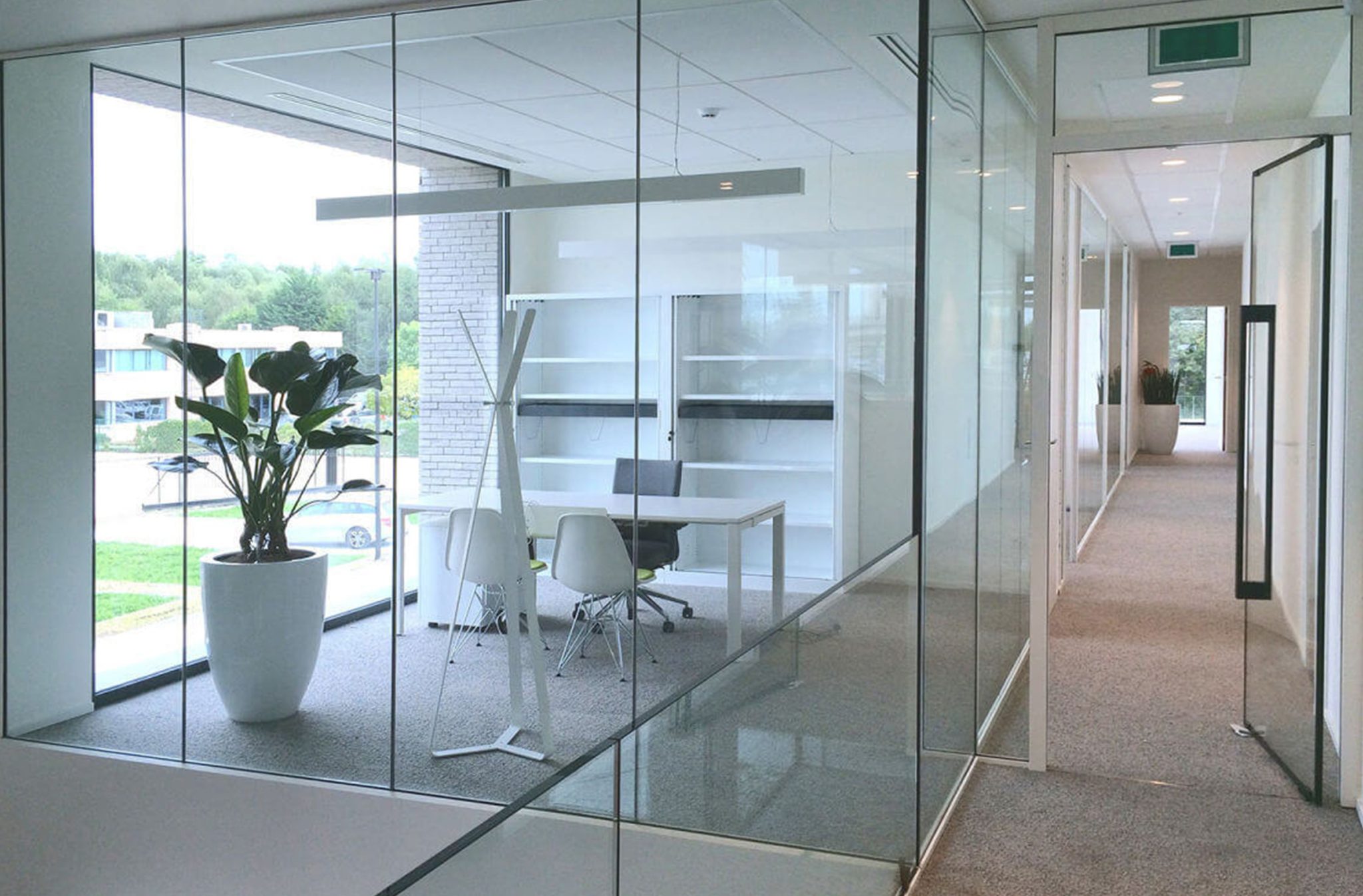
Clear glass shows everything, exactly as it is. It suits cabinets that are kept organized or lit from inside, and it makes a small kitchen feel larger because the eye travels through the doors to the back of the cabinet.
Standard clear glass has a slight green tint that shows at the edges and over white dishes. If the cabinet interior is white or the glass is thick, low-iron glass keeps the view color-true; our low-iron vs. clear glass guide explains the difference.
Seeded glass
Seeded glass is clear glass with small bubbles trapped in it, a look taken from old hand-made glass. It shows almost as much as clear glass, so it does little to hide clutter, but it adds a vintage, farmhouse, or traditional character. It works well on a few accent doors, such as the cabinets on either side of a range hood.
Reeded glass
Reeded glass, also called fluted glass, has fine vertical ribs. It lets the color and general shape of what is inside show through while breaking up the detail, so stacked plates and glasses read as soft stripes of color. That balance between display and order, along with its clean modern look, has made it one of the most requested cabinet glasses in current kitchen design.
Reeded glass suits flat-panel and slim-frame doors, and it pairs naturally with brass, black, or stainless hardware.
Patterned glass
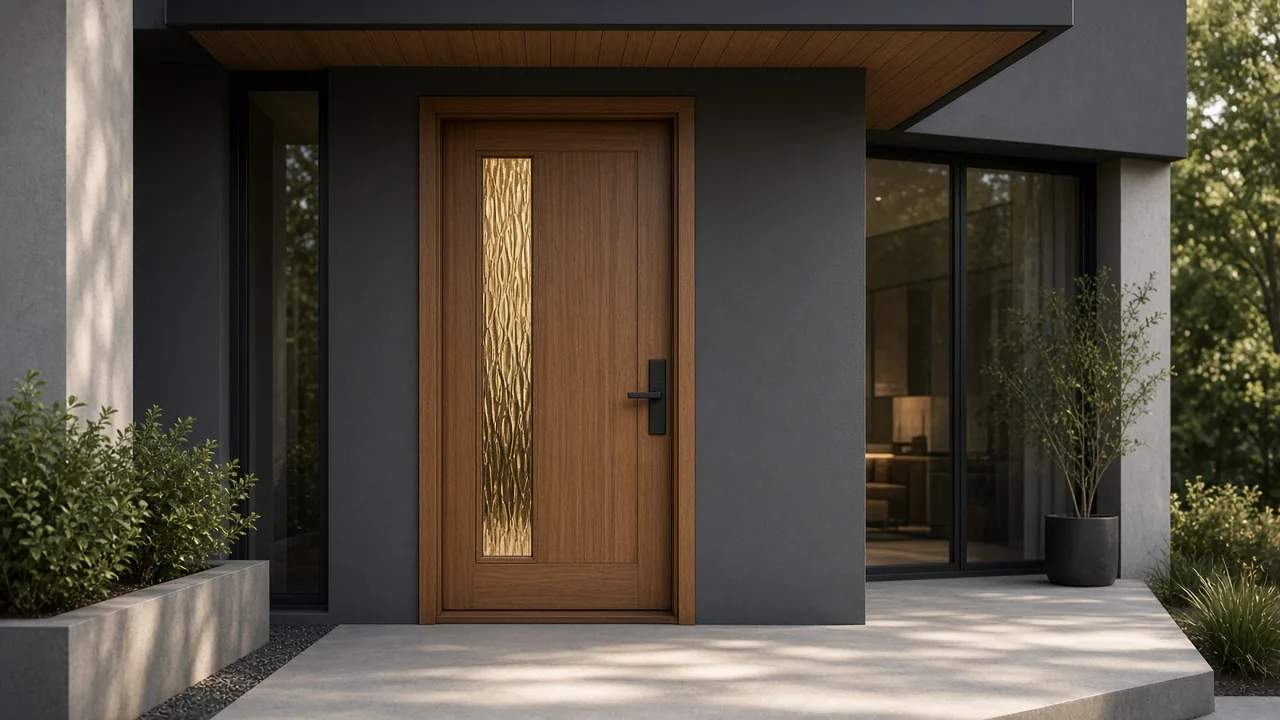
Pattern glass covers a wide range of textures, from rain and hammered patterns to geometric designs. Most patterns blur the view more than seeded or reeded glass while still passing plenty of light. Because patterns vary so much, they are best chosen from samples; our decorative glass products show the available textures.
Frosted (acid-etched) glass
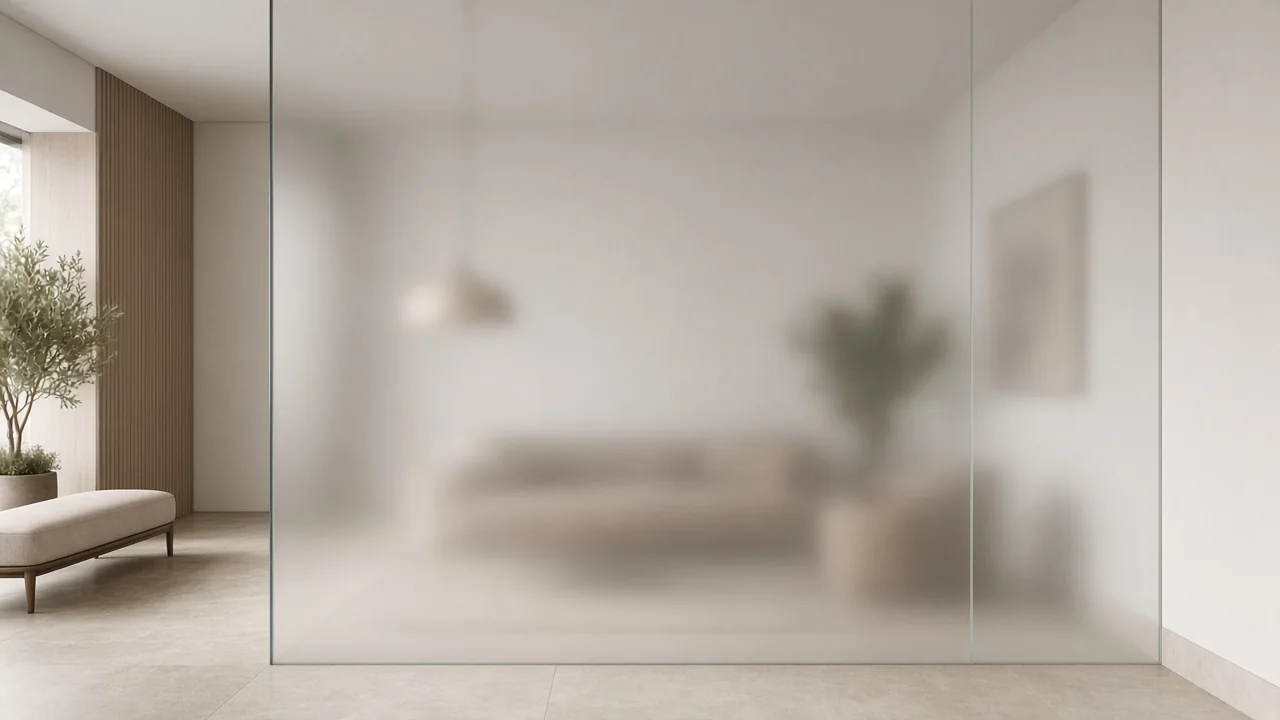
Acid-etched glass has an even satin finish that hides the contents of the cabinet almost completely while still glowing when the cabinet is lit. It is the choice for pantry cabinets, appliance garages, and any cabinet where you want the lighter look of glass without showing what is inside. Acid-etched glass resists fingerprints better than older sandblasted finishes.
Choosing at a glance
| Glass | How much it shows | Hides clutter | Best for |
|---|---|---|---|
| Clear | Everything | No | Display cabinets, lit glassware |
| Seeded | Nearly everything | Little | Vintage and farmhouse kitchens, accent doors |
| Reeded | Color and shape, not detail | Yes, mostly | Modern kitchens, everyday dish storage |
| Patterned | Light and color, varies by pattern | Yes | Character pieces, bars, butler’s pantries |
| Frosted (acid-etched) | Light only | Completely | Pantries, appliance garages, storage |
Framed doors or aluminum-framed glass doors
There are two common ways to put glass in a cabinet:
- Glass in wood or painted frame doors. The glass sits in a recess on the back of a frame-and-panel door. This keeps the cabinet style consistent with the rest of the kitchen and is the usual route when existing doors are converted.
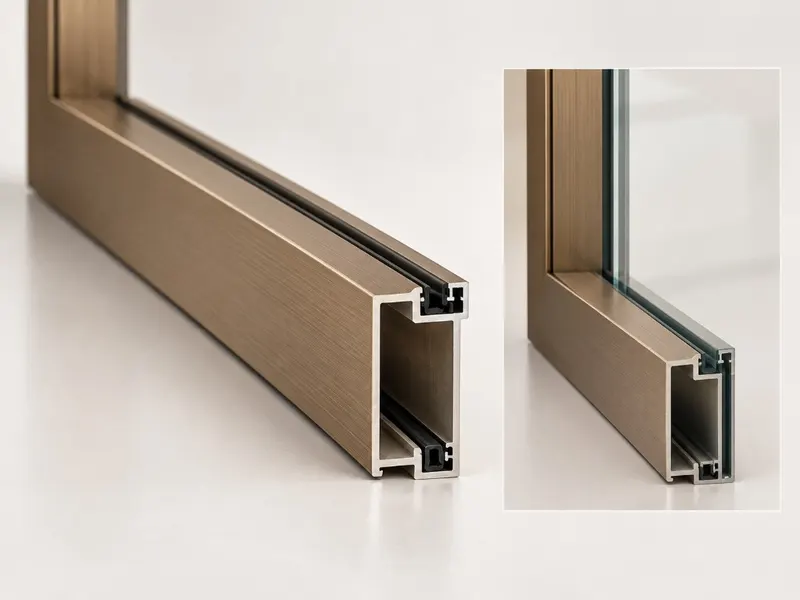
- Aluminum-framed glass doors. A slim metal frame holds the glass in a channel, giving a narrow, modern sightline. Finishes such as brushed bronze, black, and stainless are available, and the frames fit standard cabinet hinges.
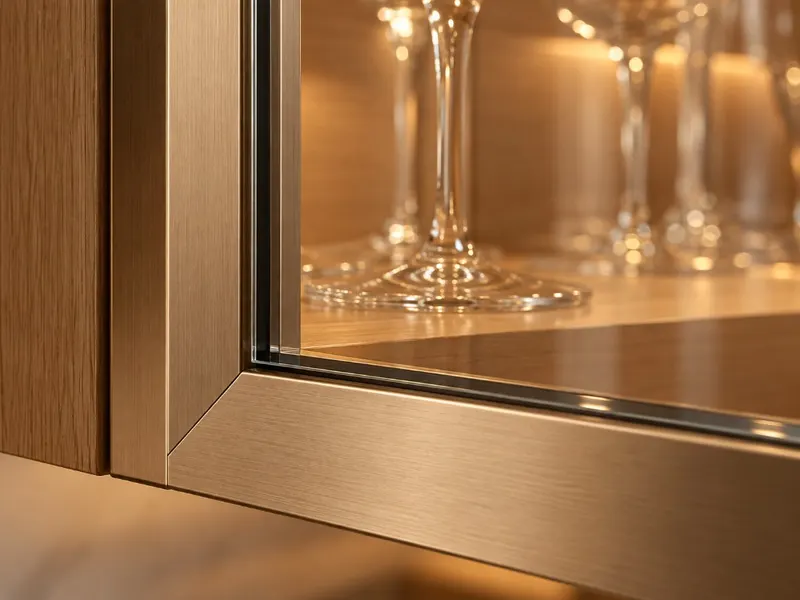
Installation considerations
- Thickness. Most cabinet inserts use thin glass, typically 1/8 to 3/16 inch, sized to the door’s recess. Larger doors and frameless designs use thicker glass for stiffness.
- How it is held. In wood doors the glass is held with glazing clips, a retainer strip, or a bead of clear silicone; in aluminum frames it sits in a gasketed channel. The method affects how easily the glass can be replaced later.
- Measuring. The glass is sized to the recess on the back of the door, not the visible opening on the front, with a small clearance so the door can move without stressing the glass. We measure on site so each insert fits its own door.
- Converting existing doors. Removing a center panel and routing a recess is detailed work. It suits solid frame-and-panel doors, but not slab doors or doors with narrow frames.
- Safety. Tempered glass is worth considering for lower cabinets and large doors, and it has to be ordered to exact size because it cannot be cut afterward.
- Lighting. LED strips or puck lights inside the cabinet make clear and reeded glass glow and keep frosted glass from looking flat. Plan the wiring before the cabinets are installed.
Mixing glass in one kitchen
Using more than one glass is common and often looks better than one type everywhere: clear or reeded glass on the display cabinets near the dining area, frosted glass on the pantry, and seeded glass on a single accent cabinet. Keep the hardware finish consistent so the different glasses still read as one design. For backsplash glass that ties into the cabinets, see our glass backsplash ideas, and for glass elsewhere in the home, our decorative glass guide.
What to send for a quote
- Photos of the cabinets, front and back of a door.
- The door sizes, or the number of doors and their approximate dimensions.
- Whether you are converting existing doors or ordering new aluminum-framed doors.
- The glass types you are considering, and any samples you like.
Capital Glass fabricates and installs cabinet glass for kitchens across the Houston area. Request a decorative glass quote and we will recommend the glass for each cabinet and quote fabrication and installation together.
Common questions
Can I add glass to my existing kitchen cabinet doors?
Often, yes. Shaker-style and other frame-and-panel doors can have the center panel removed and a recess routed on the back to hold glass. The rails and stiles must be wide and solid enough to keep their strength. Slab doors usually cannot be converted and are replaced with new frame doors or aluminum-framed glass doors instead.
Should cabinet glass be tempered?
Cabinet doors are usually not a code-required safety glazing location in a home, so standard annealed glass is common. Tempered glass is a sensible upgrade for lower cabinets, large doors, and households with young children, because it breaks into small pieces instead of sharp shards. Tempered glass must be cut to size before tempering and cannot be trimmed afterward.
Which way should textured cabinet glass face?
Most installers put the textured side toward the inside of the cabinet so the outside face is smooth and easy to wipe clean. Some patterns look different depending on which side faces out, so it is worth checking a sample both ways before the glass is installed.