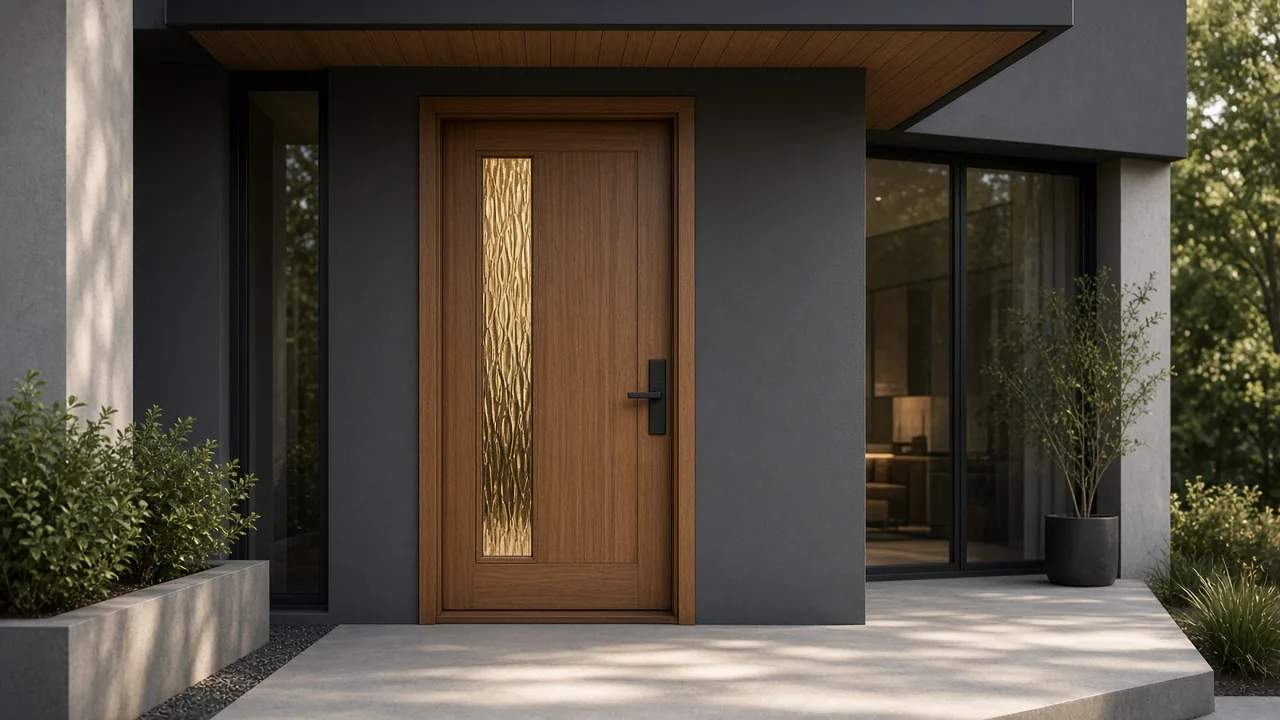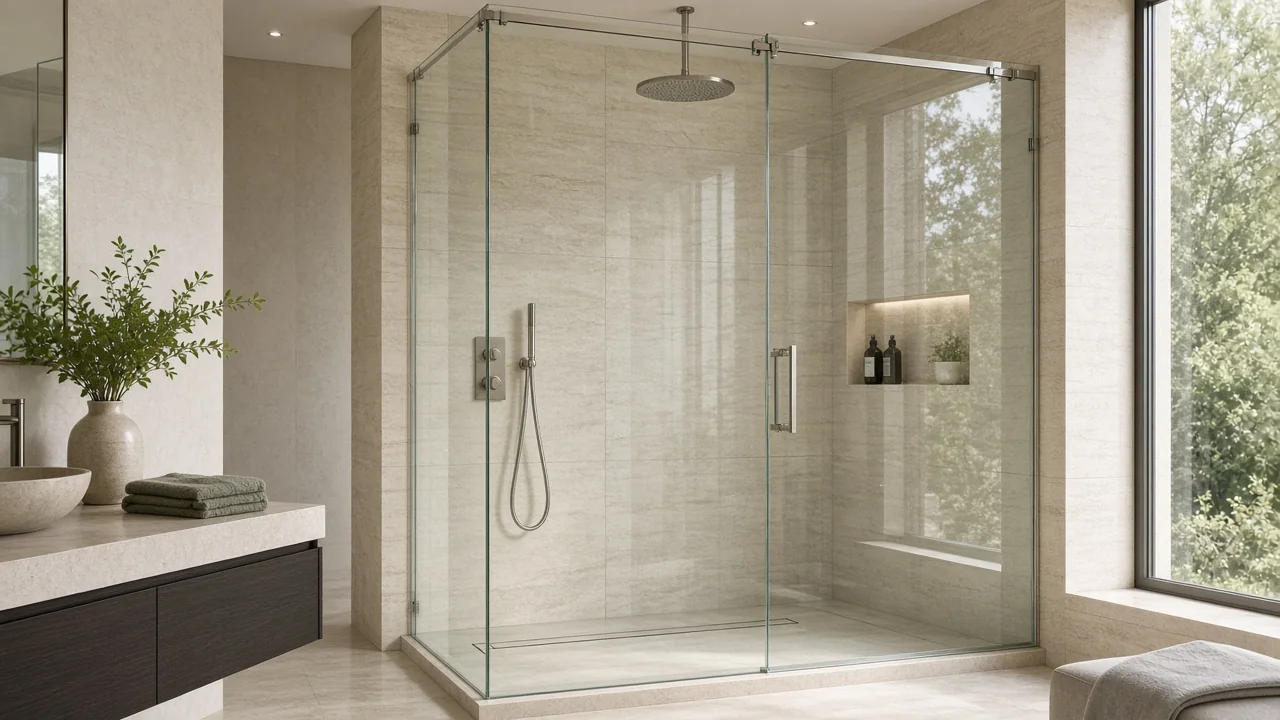

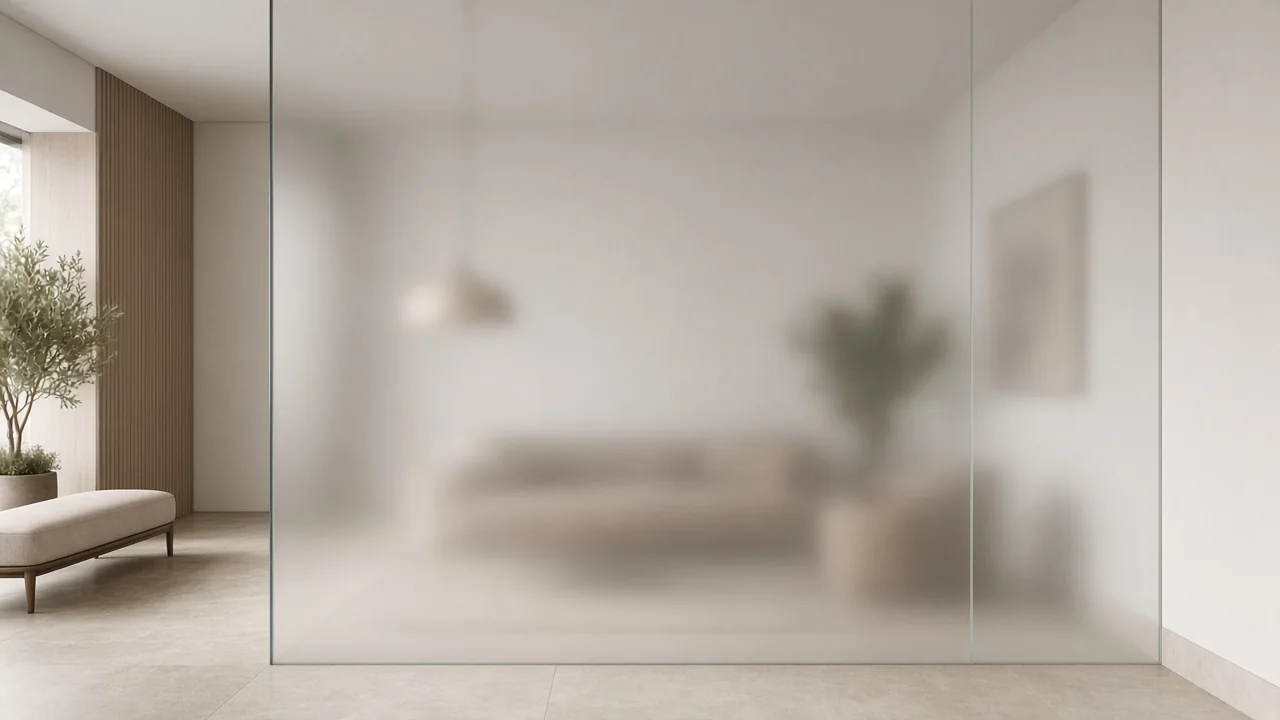
The images in this article are representative and do not show CLiC glass.
Source: CLiC On-Demand Privacy Glass, from Cardinal IG Company (opens in a new tab). Product claims below are the manufacturer’s own descriptions.
Most privacy glass is fixed: an etched or textured panel is always obscure, and clear glass is always clear. Switchable privacy glass, often called smart glass, changes between the two. With a switch, an app, or a home automation system, a window, door, or partition goes from a clear view to a soft, diffused privacy panel and back.
Where it makes sense
- Street-facing windows and front doors, where you want daylight and a view most of the time but privacy in the evening.
- Bathrooms, so a window or an enclosure can be clear when the room is empty and private when it is in use.
- Home offices and media rooms, separated from living spaces by a glass partition.
- Bedrooms and primary suites that face neighbors, as an alternative to blinds that collect dust.
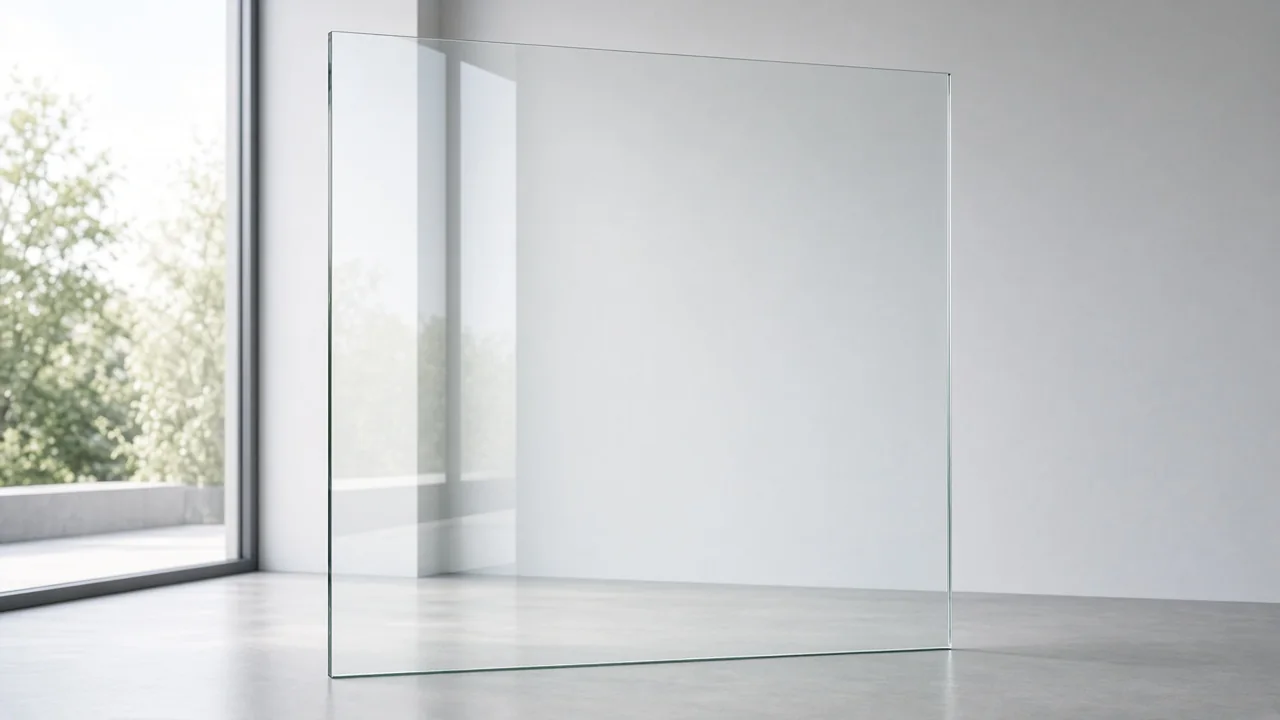 In its clear state, switchable glass looks like ordinary clear glass. Representative image; not CLiC glass.
How it works
Switchable glass uses a thin active layer between panes that changes how light passes through when a low voltage is applied or removed. In its private state the layer scatters light, so shapes behind the glass blur while daylight still comes through, much like etched glass.
Many products use a liquid crystal film laminated between two lites of glass. Newer products take a different approach. Cardinal IG Company, for example, describes its CLiC on-demand privacy glass as using film-free PSCT technology that shifts from clear to private in milliseconds, with no visible haze in the clear state, a protected edge seal against moisture and delamination, and a UV-stable design (source: CLiC Glass). Those are the manufacturer’s descriptions; compare them against independent test data and the warranty for any product you consider.
Built into the window, not added on
The better products are factory-integrated: the switchable layer is part of the insulated glass unit, so the window or door is ordered with it. Cardinal says CLiC needs only two small wires routed to the rough opening, runs on low voltage, and works with third-party controls. It also says CLiC can be combined with low-E coatings, grilles, and simulated divided lites.
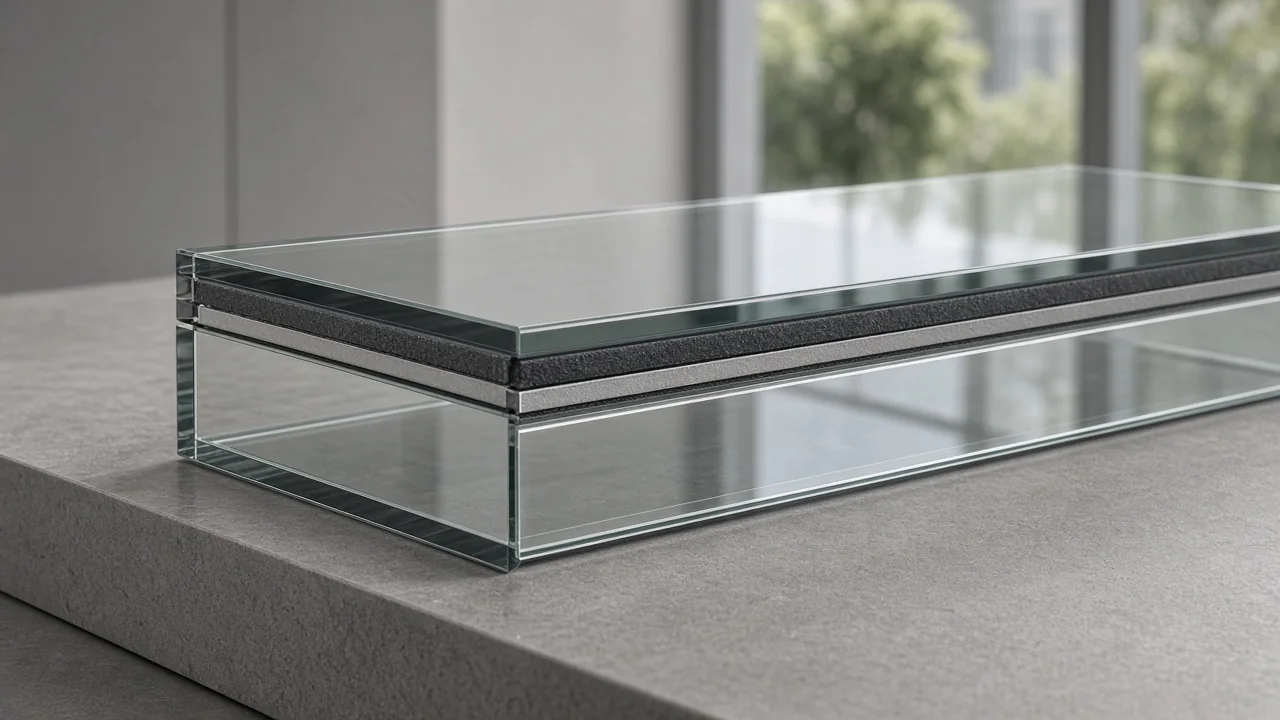 Switchable layers are typically built into an insulated glass unit like this one. Representative image; not CLiC glass.
For a renovation, that means planning ahead: the wiring has to reach each opening before the walls are closed, and the windows or doors are made to order.
Questions to ask before you buy
- Which state is it in without power? Some products rest private, others rest clear.
- How clear is “clear”? Ask about haze in the clear state, especially for windows with a view.
- How is it powered and controlled? Voltage, where the wires run, and which switches or smart-home systems it works with.
- How durable is the edge seal? Moisture at the edge is the common failure point for laminated and insulated glass. Cardinal cites IGCC E2190 seal durability testing for CLiC.
- Is it safety glazing? Glass in doors and other hazardous locations must be safety glass. Cardinal states CLiC is tested to ANSI Z97.1 and 16 CFR 1201; confirm the rating for the configuration you order.
- What about energy performance? Ask for the whole-window U-factor and solar heat gain with the coating you choose. Cardinal describes CLiC as IECC compliant with a climate-appropriate low-E coating and ENERGY STAR capable when configured for the product and climate zone.
- What is the warranty, and does it cover the switching function as well as the glass seal?
Switchable glass or fixed privacy glass?
If an opening always needs privacy, a fixed option such as acid-etched glass or textured pattern glass costs less, needs no power, and never fails to switch. Switchable glass earns its cost where the same opening needs to be clear at some times and private at others. Our decorative glass guide covers the fixed options room by room.
What to send us
- Which windows, doors, or partitions you are considering, with photos.
- Whether the project is new construction or a renovation.
- How you want to control the glass (switch, app, or home automation).
We will help you compare switchable and fixed privacy glass for each opening and coordinate the glass with the rest of the project.
Common questions
Does switchable glass replace blinds and shades?
For privacy, it can: in its private state it blocks the view while still letting daylight through. It does not darken a room the way blackout shades do, and products differ in how much heat and glare they control, so a bedroom that needs darkness may still want a shade.
Can switchable glass be added to my existing windows?
Usually not as a simple glass swap. Factory-integrated products are built into the insulated glass unit and need low-voltage wiring routed to the opening, so they are typically ordered with new windows or doors. Adhesive privacy films exist for retrofit, but they are a different product with different durability.
What happens if the power goes out?
It depends on the product. Some switchable glass is private when unpowered and clear when powered, others work the other way, so ask the manufacturer which state the glass rests in and how it is controlled.