
Open When You Want It. Private When You Need It.
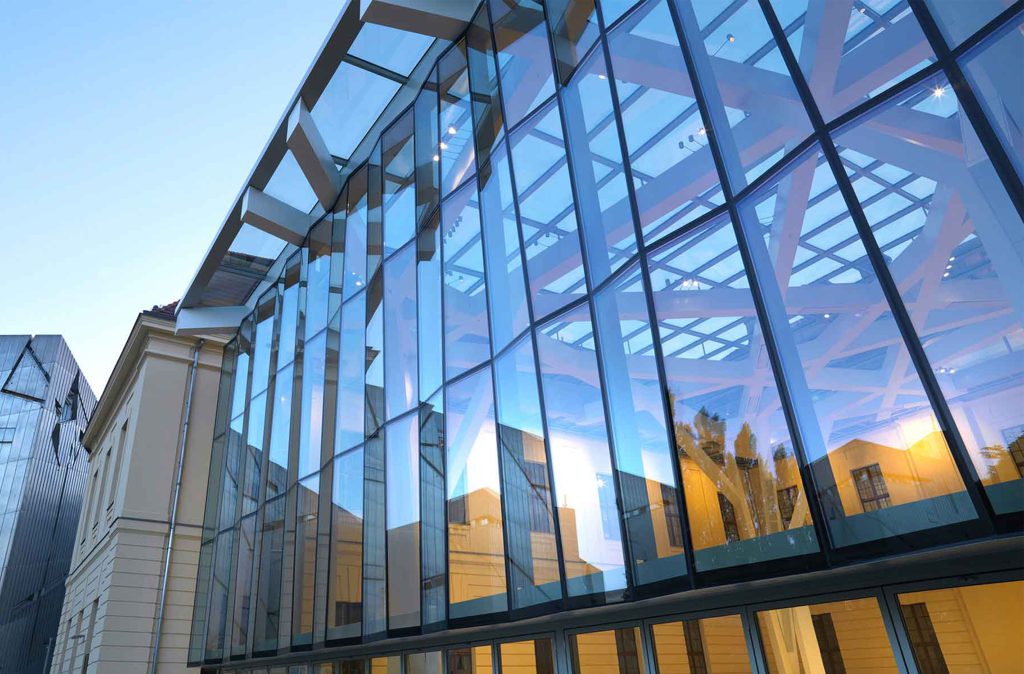
Glass walls are a defining feature of modern commercial architecture. They bring natural light into offices, make smaller spaces feel open, and create the clean appearance that architects and business owners want.
But openness creates a challenge: how do you maintain privacy without permanently covering the glass?
Switchable privacy glass offers an alternative. Depending on the technology, a glass panel can transition electronically between a transparent appearance and a translucent privacy state.
For Houston commercial projects, that creates possibilities for conference rooms, professional offices, healthcare facilities, hospitality spaces, and interior glass partitions.
What Is Switchable Privacy Glass?
Switchable privacy glass uses electronically controlled materials to change how light travels through the glazing.
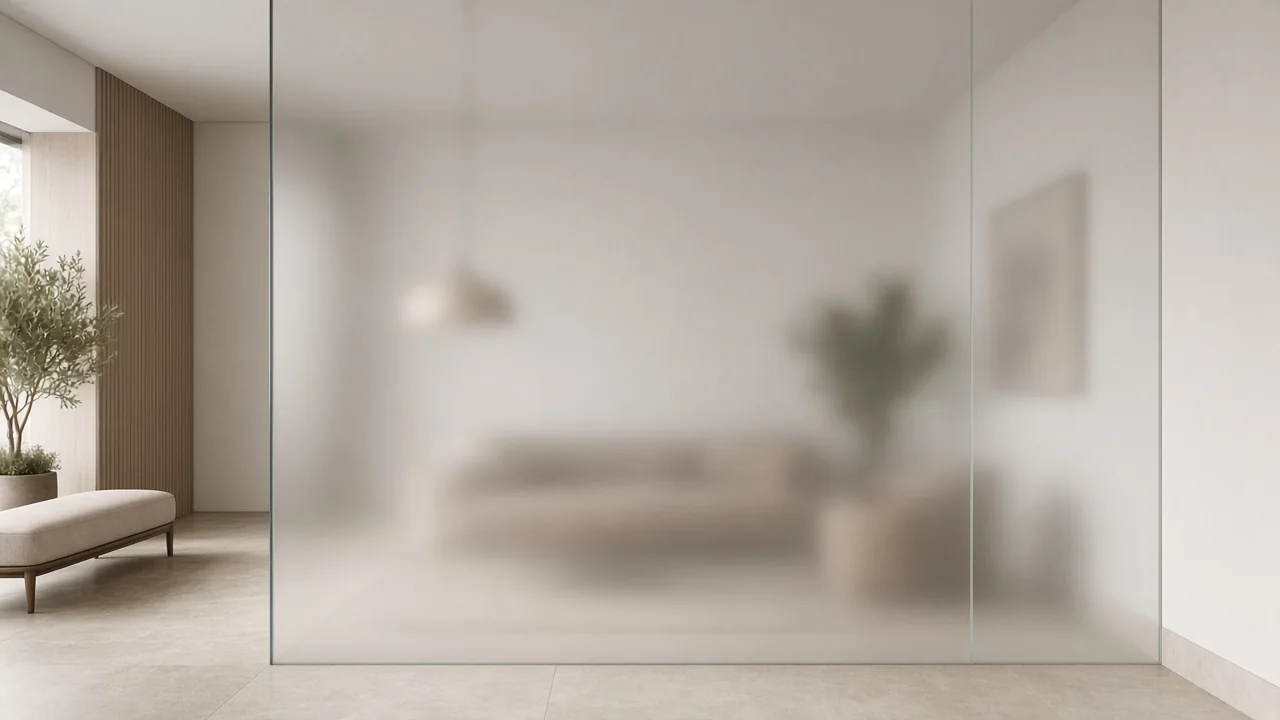
In its transparent state, the panel allows occupants to see through it. In its privacy state, the panel scatters light, making details on the opposite side difficult to distinguish.
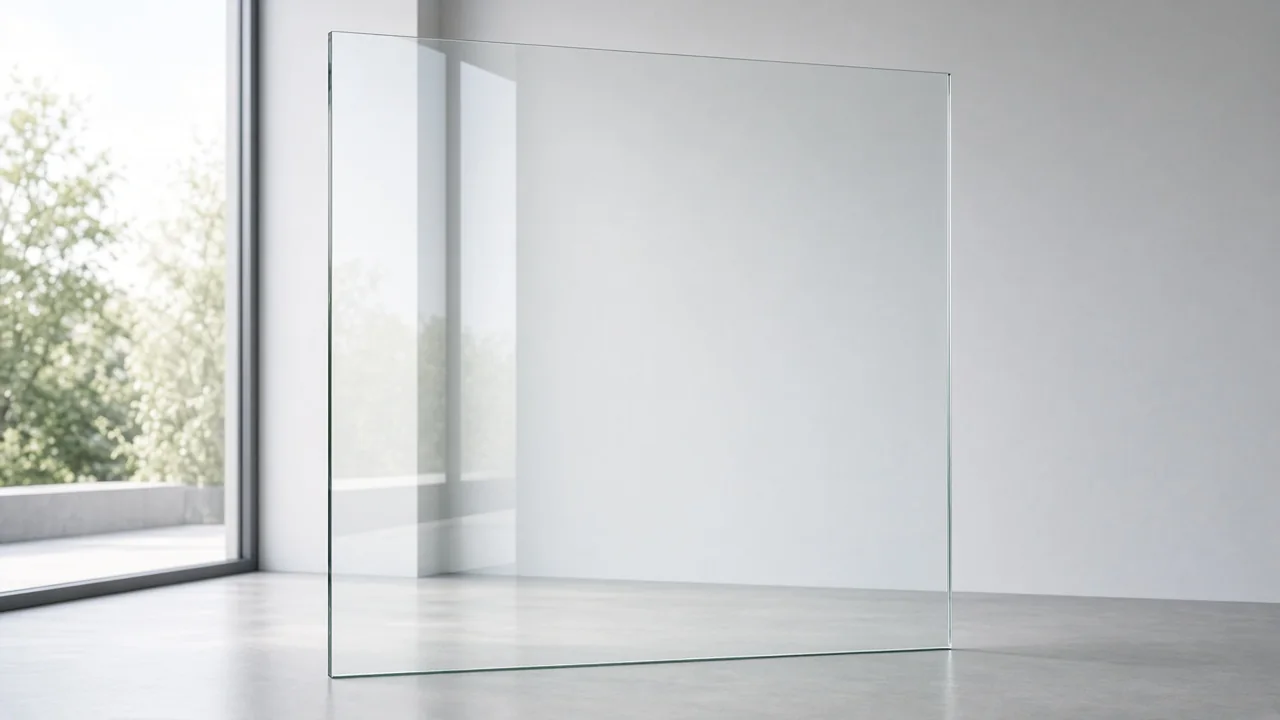 The transparent state looks like ordinary clear glass. Not a Capital Glass project or exact product representation.
Unlike conventional blinds or permanently frosted glass, some switchable products allow the space to change between these two appearances as needed.
Several technologies are available, and they are not interchangeable.
Understanding the Options
| Glass solution | Primary advantage | Important consideration |
|---|---|---|
| Integrated switchable glass | Privacy technology built into a new glazing product | Requires coordination during design and fabrication |
| Retrofit switchable film | May add electronic privacy to suitable existing glass | Surface condition, edges, wiring, and film suitability matter |
| Permanent frosted glass | Consistent privacy without electronics | Cannot switch back to a fully transparent appearance |
| Reeded or patterned glass | Decorative texture with varying visual obscuration | May still reveal silhouettes and objects |
For projects where changing privacy is unnecessary, conventional patterned decorative glass may be the simpler choice.
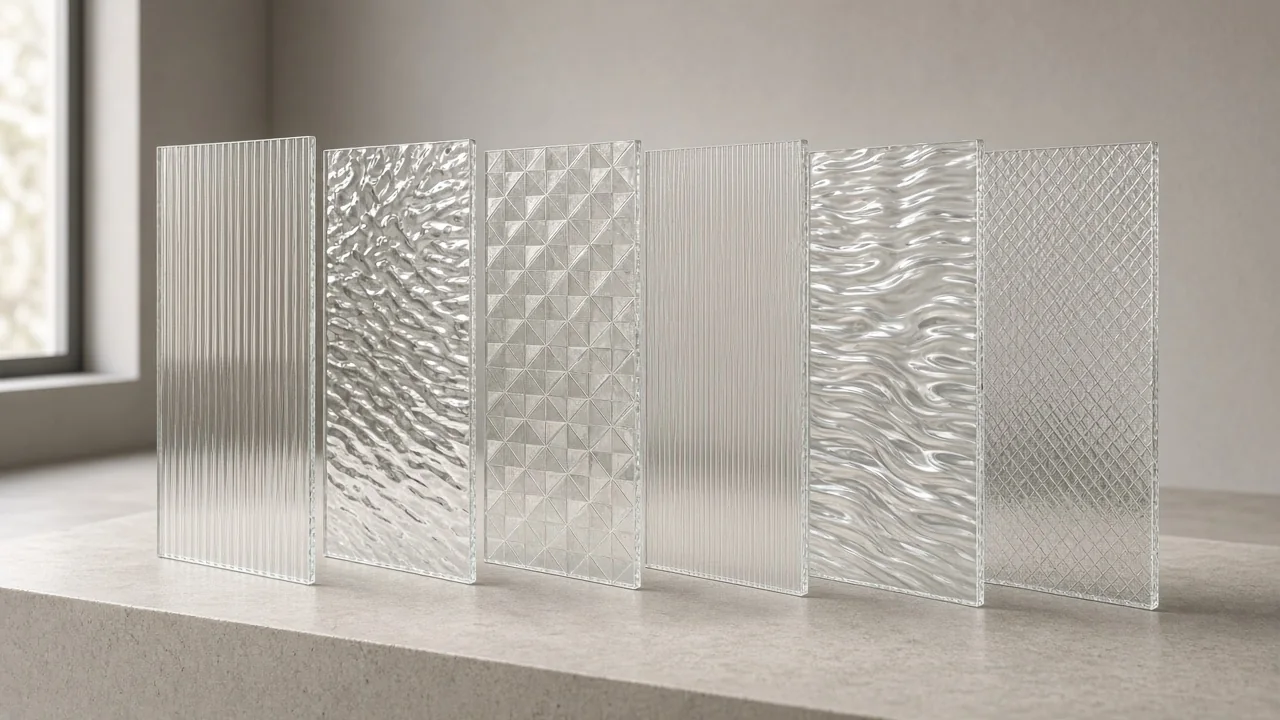 Reeded and patterned glass give permanent, partial privacy without electronics. Not a Capital Glass project or exact product representation.
Five Commercial Applications Worth Considering
1. Conference Rooms and Meeting Spaces
A glass conference room can feel connected to the office during normal operations and become visually private during confidential discussions.
Switchable glass offers that flexibility without permanent window coverings.
However, visual privacy does not automatically mean acoustic privacy. Conference rooms also require attention to glass thickness, framing, seals, doors, and tested sound performance.
2. Executive Offices
Interior glass offices can retain the light and appearance of an open workspace while providing visual separation when needed.
The glazing design should consider controls, exposed edges, hardware, and how the partition connects to the surrounding construction.
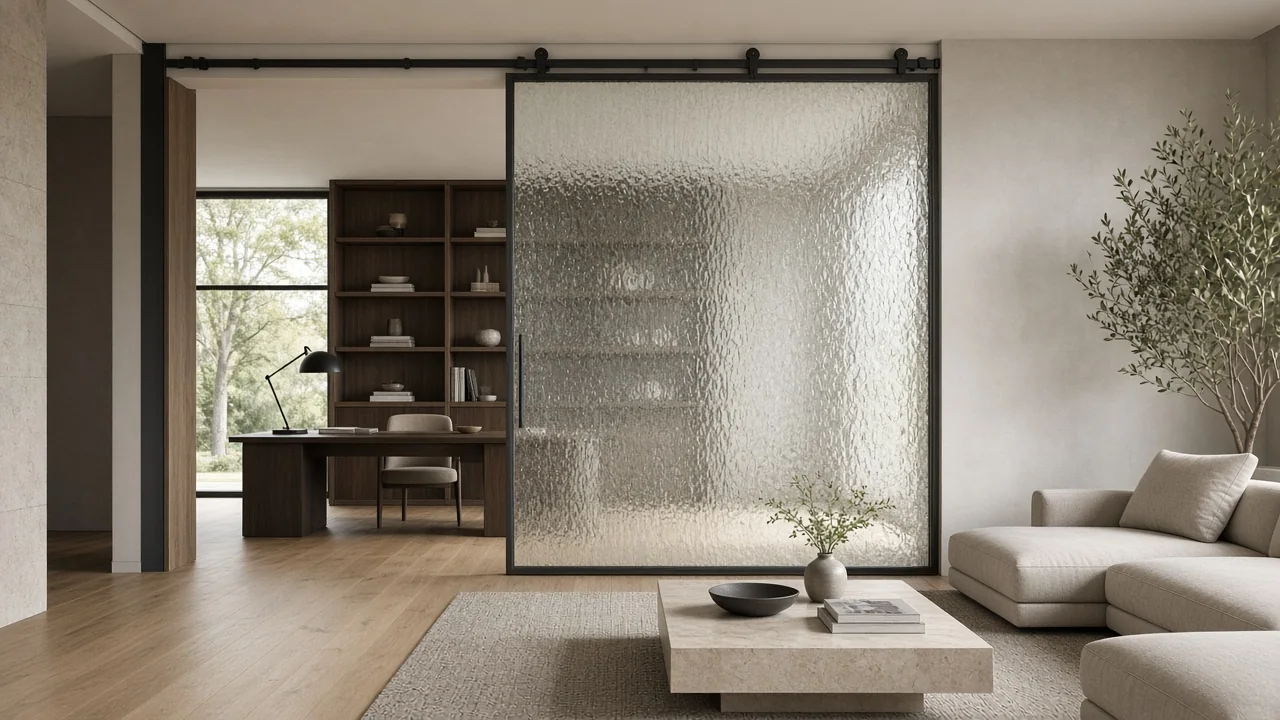 Glass separation keeps an office bright while defining the space. Not a Capital Glass project or exact product representation.
3. Medical and Professional Facilities
Examination rooms, consultation spaces, and certain waiting-area partitions may benefit from privacy that can change throughout the day.
Healthcare applications require particular attention to patient visibility, cleaning requirements, emergency operation, and the applicable building and facility standards.
Switchable glazing should be evaluated as one component of the room’s overall privacy design.
4. Restaurants and Hospitality Spaces
Decorative glass can help create a sense of separation without relying on solid walls.
Switchable panels may be useful for private dining rooms, event spaces, and meeting areas where the desired level of openness changes during operation.
5. Retail and Commercial Interiors
Stores, showrooms, and customer-facing commercial spaces can use specialty glazing to establish distinct areas while preserving a visually cohesive interior.
Permanent patterned glass, back-painted glass, and switchable privacy glass offer different ways to achieve that goal.
What Houston Architects and Contractors Should Know
Choosing a privacy-glass product is only part of a successful installation.
The glazing system, electrical requirements, fabrication limitations, and surrounding construction must be considered together.
- Glass and framing: Verify available panel sizes, edge support requirements, safety glazing, and compatibility with the selected aluminum or interior partition system.
- Electrical coordination: Switchable products require appropriate controllers and wiring. The glazing and electrical trades should coordinate power locations, control interfaces, and access for servicing before the glass is fabricated.
- Safety and code compliance: A product’s suitability depends on its tested configuration and installation location. Documentation for a particular manufacturer’s glass does not automatically establish compliance for every assembly.
- Houston climate: Privacy and solar performance are different characteristics. For exterior glazing exposed to Houston heat, verify the complete insulating-glass construction, energy properties, and exterior-use suitability rather than assuming a privacy feature also provides adequate solar control.
- Long-term operation: Review cleaning instructions, warranty coverage, replacement procedures, available service support, and what happens when electrical power is lost.
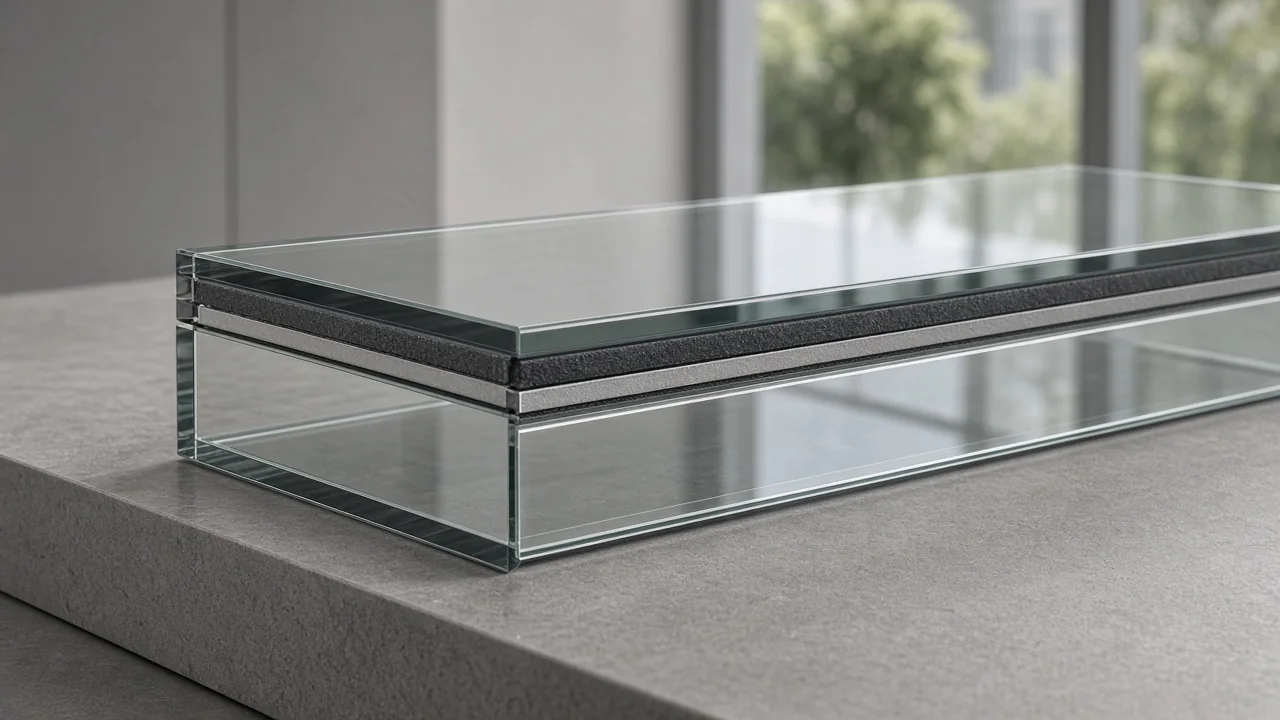 For exterior glazing, the complete insulating-glass construction decides energy performance. Not a Capital Glass project or exact product representation.
Are All Smart Glass Products the Same?
No.
Different switchable-glass technologies can vary in clarity, haze, privacy appearance, power consumption, available sizes, and durability.
For example, Cardinal IG Company offers CLiC, an on-demand privacy product using a film-free polymer-stabilized cholesteric texture (PSCT) design. Other products use polymer-dispersed liquid crystal (PDLC) technologies in laminated panels or applied films.
These technologies should be evaluated against the specific project rather than treated as equivalent.
See Cardinal CLiC technical information and Gauzy’s PDLC smart-glass overview for examples of different product approaches.
What Determines the Cost of Switchable Privacy Glass?
There is no single reliable per-square-foot price for every smart-glass installation.
Project cost can depend on:
- The selected technology and manufacturer.
- Total glass area and panel dimensions.
- New construction versus retrofit installation.
- Required safety-glazing and insulating-glass configurations.
- Controllers, electrical work, and automation requirements.
- Framing modifications, site access, and installation complexity.
- Replacement and long-term maintenance considerations.
For an accurate comparison, request pricing for the complete installed solution, not simply the glass material.
An integrated switchable assembly may cost more initially than a permanent frosted panel. Whether its flexibility justifies the added cost depends on how the space will be used.
Planning a Commercial Privacy-Glass Project in Houston?
Whether your project calls for switchable glazing, permanent patterned glass, or another specialty glass solution, the best results start with a clearly defined glazing scope.
Capital Glass works with commercial glazing systems and architectural glass for projects throughout the Houston market.
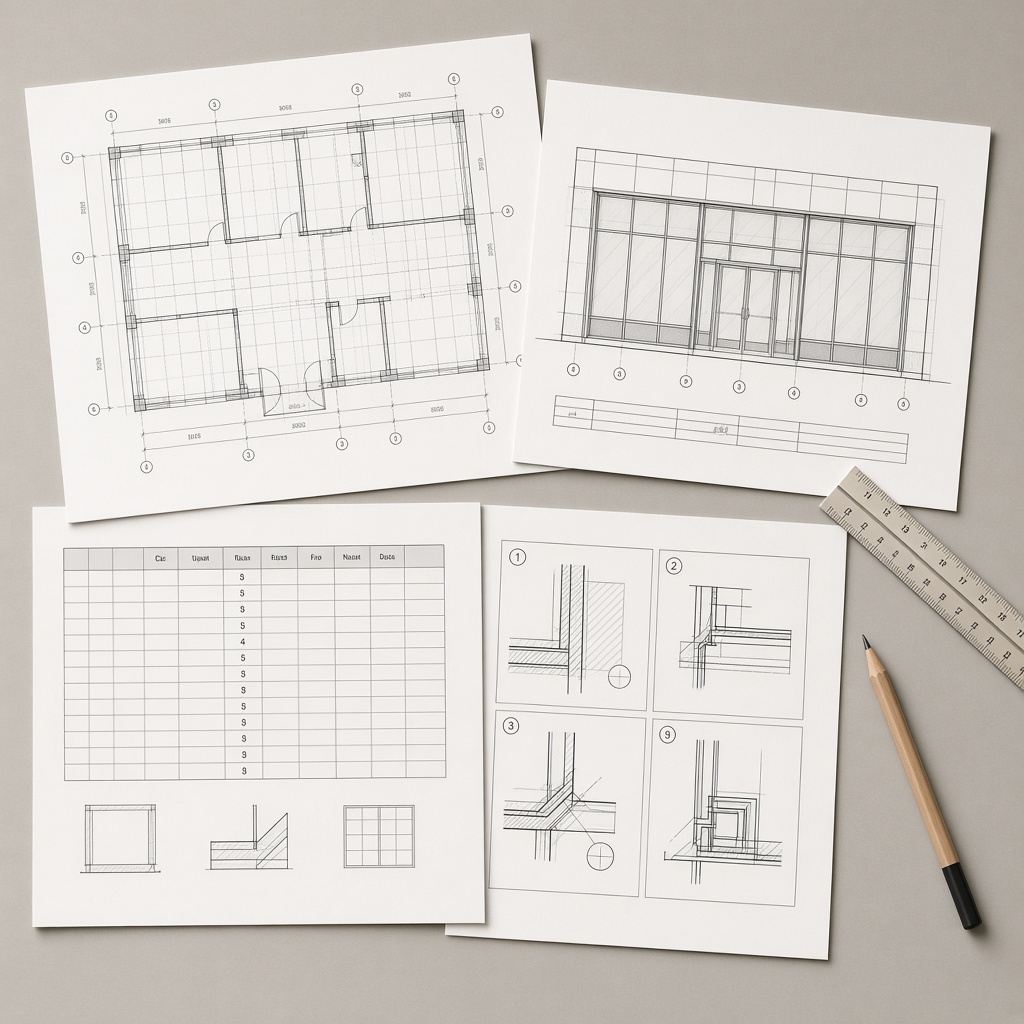
For a project review, provide architectural drawings, approximate opening dimensions, intended use, required privacy level, and any product specifications already selected.
Discuss Your Commercial Glass Project
Explore Interior Glass Systems and Decorative Glass Products for additional design options. For homes, see our residential guide to switchable privacy glass.
Common questions
Does switchable glass provide complete privacy?
It typically provides visual obscuration, not an absolute guarantee that people or silhouettes will be invisible. Privacy performance depends on the product, viewing distance, and lighting.
Can existing glass be converted into switchable glass?
Some existing panels can accept retrofit privacy films. The glass condition, location, size, access, and electrical requirements must be reviewed first.
Does it work during a power outage?
That depends on the technology. Many conventional PDLC systems become translucent when unpowered. Verify the exact product's default state and operational requirements.
Does switchable glass reduce noise?
Some glass assemblies provide useful acoustic performance, but the switchable feature alone should not be treated as a soundproofing system. Request assembly-specific acoustic test data.
Can it be installed in exterior storefronts?
Some products are designed for exterior glazing, while others are intended for interior use only. The entire storefront or window assembly must meet the project's performance and code requirements.