
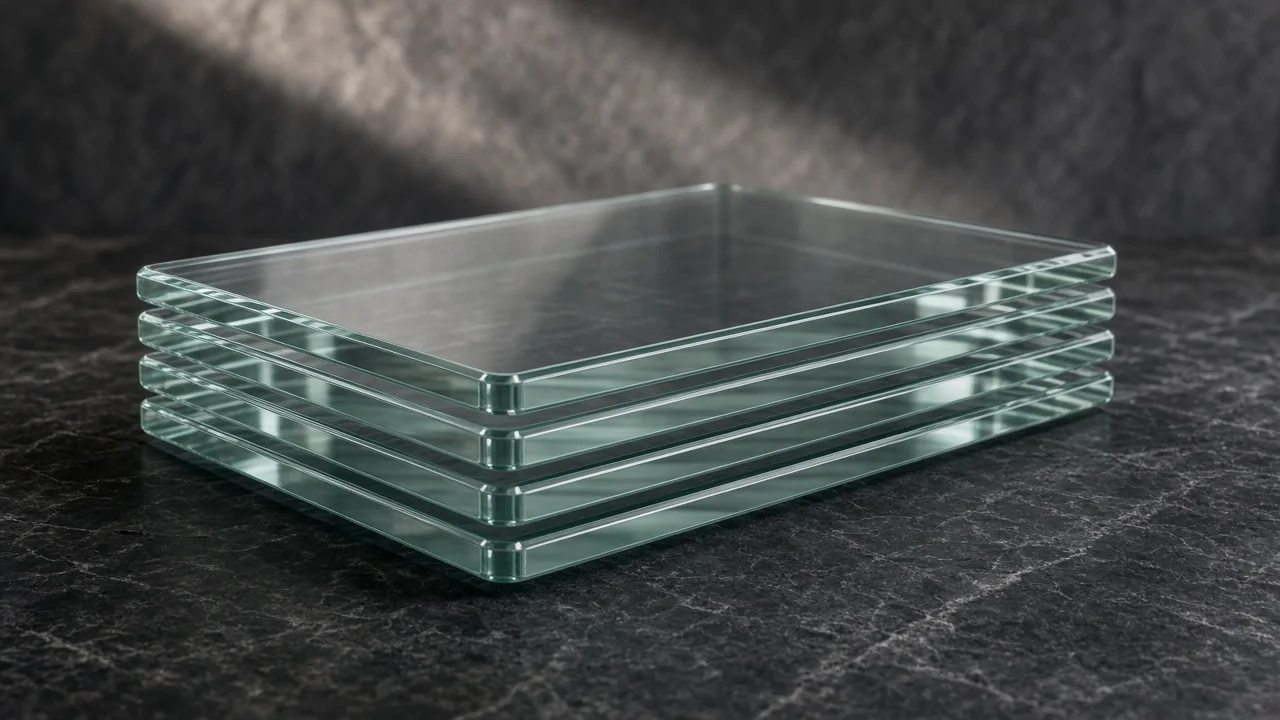
Hold a piece of ordinary clear glass edge-on and it looks green. That color is in every sheet of standard glass, and in most projects nobody notices it. In a few situations, such as white back-painted backsplashes, thick shower glass, and glass with polished exposed edges, it becomes the first thing people see. Low-iron glass exists for those situations.
Why clear glass looks green
Standard clear float glass is made from sand and other raw materials that contain a small amount of iron. The iron gives the glass a faint green cast. Looking straight through a single thin pane, you rarely see it. The color builds up with the distance light travels through the glass, which is why it shows most:
- at a polished edge, where you look through the full width of the panel;
- in thick glass, such as 3/8 inch or 1/2 inch shower and tabletop glass;
- behind a light color, such as white or pale back-painted glass, where the green shifts the color you chose;
- in stacked or layered glass, such as laminated panels and display cases.
Low-iron glass is made from raw materials with much less iron. It looks noticeably clearer and more neutral, it transmits slightly more light, and its edges read as pale blue-white instead of green. Each of the major float glass manufacturers sells a low-iron product under its own brand name.
Where low-iron makes a visible difference
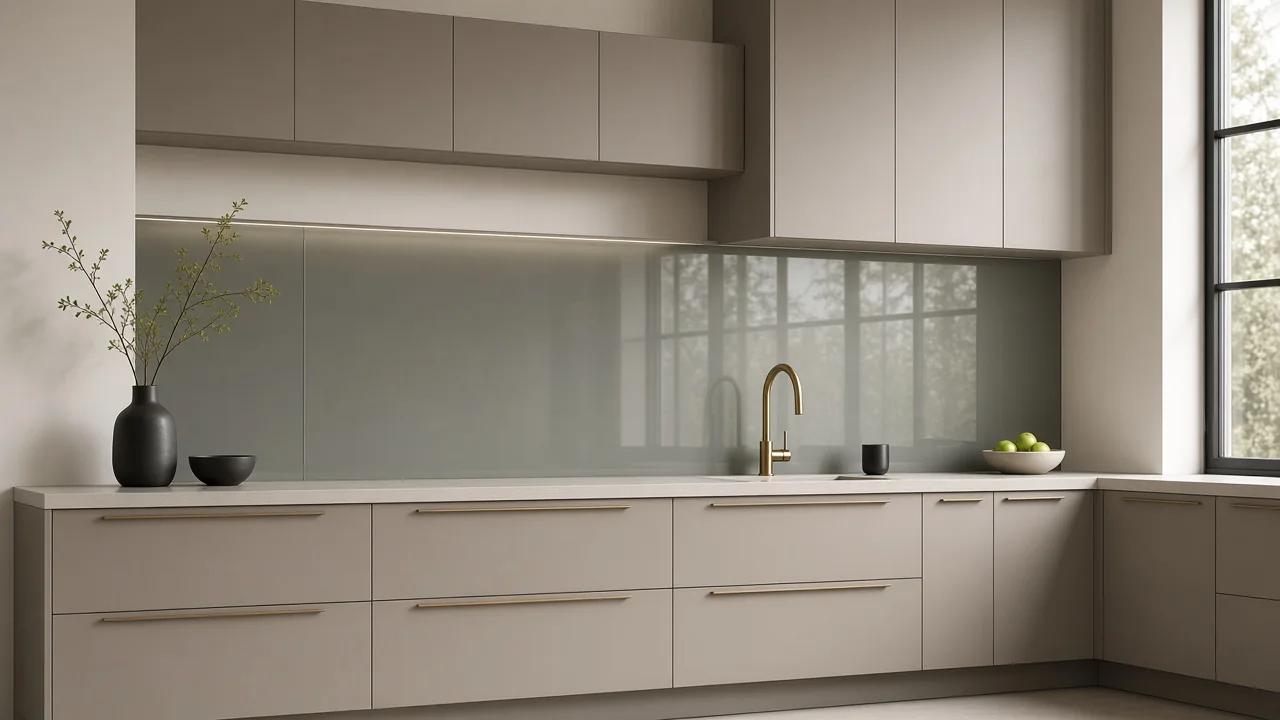
White and pale back-painted backsplashes. Back-painted glass is viewed through the glass, so the glass tints the paint. A white painted on standard clear glass reads slightly green or minty; on low-iron it reads as the white on the sample. For pale grays, creams, and soft pastels the shift is smaller but still visible side by side. The backsplash guide covers color matching in more detail.
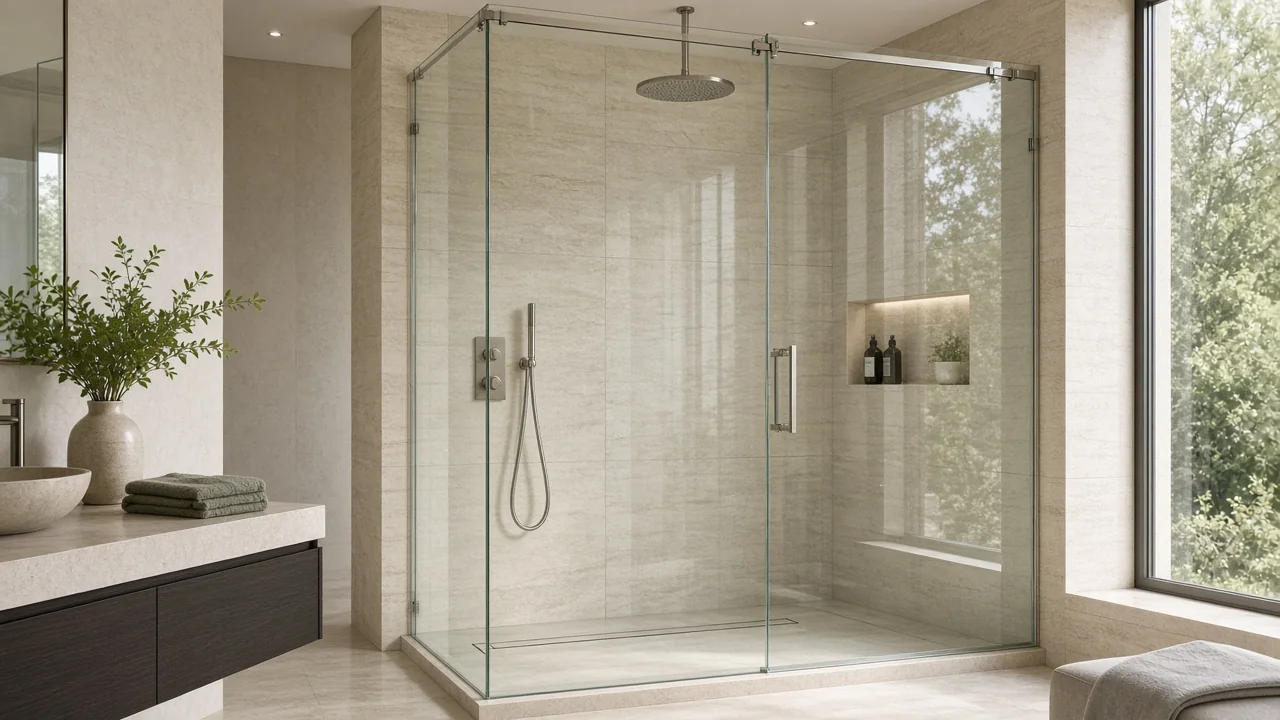
Frameless shower glass. Heavy glass for frameless enclosures is usually 3/8 inch or 1/2 inch, and its polished edges are exposed on every side. Against white tile or marble, low-iron keeps the enclosure from reading as a green outline. The frameless and semi-frameless guide explains the thickness choices.
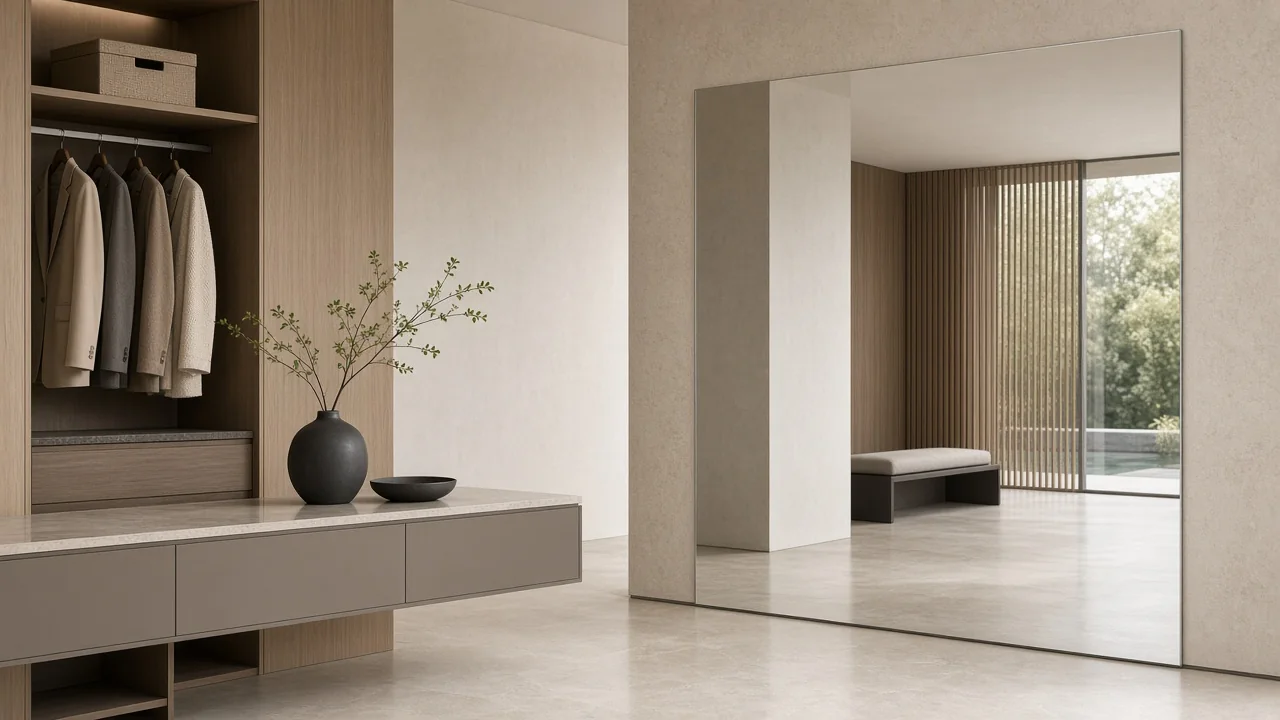
Tabletops and shelving. A 1/2 inch tabletop or a run of glass shelves shows its edge color clearly, especially in a white or light-wood room. Display cases and stacked shelving multiply the effect.
Where standard clear is fine
Low-iron costs more than standard clear glass, and in many places the difference is invisible:
- Dark back-paint colors. Charcoal, black, navy, deep red, and metallic colors look the same on either glass once painted.
- Framed glass with hidden edges. In a window, a cabinet door insert, or a framed shower panel, the edge sits inside a frame or channel.
- Thin glass viewed straight on. A 1/8 inch or 3/16 inch pane in a picture frame or a window shows almost no color.
- Tinted, patterned, or acid-etched glass, where the surface or tint is the look. Several of these are also available on a low-iron base when a very clean color matters.
How to decide
Look at the edge and the color, not the face of the glass:
- If the edge will be exposed and polished, and the glass is 3/8 inch or thicker, low-iron is usually worth it.
- If the glass sits in front of a white or pale color, compare samples of both glasses against that color.
- If the edges are hidden and the color behind the glass is dark, standard clear is the practical choice.
Low-iron glass is tempered, laminated, back-painted, and fabricated the same way as standard clear glass, so the choice does not change how the piece is made or installed.
What to send for a quote
The use (backsplash, shower, tabletop, shelving), the size or dimensions, the thickness if you know it, the paint color or sample for back-painted glass, and a photo of the space. We will tell you where low-iron will make a visible difference and quote both options where it is a close call.
Common questions
Why does my glass look green?
Standard clear glass contains a small amount of iron, which gives it a green cast. You see it most at a polished edge, in thick glass, and behind white or pale colors. Low-iron glass is made with much less iron and looks clearer and more neutral.
Is low-iron glass worth the extra cost?
Where the edge is exposed and the glass is 3/8 inch or thicker, or where the glass sits in front of a white or pale color, the difference is visible and usually worth it. Behind dark colors, or where the edges are hidden in a frame, standard clear glass looks the same and costs less.
Can low-iron glass be tempered and back-painted?
Yes. It is tempered, laminated, back-painted, and fabricated the same way as standard clear glass.