


A double-pane window that looks cloudy, milky, or streaked between the panes is one of the most common glass calls in Houston homes. The glass is not dirty: the seal that keeps the space between the panes dry has failed. The good news is that the whole window rarely has to go. In many cases only the sealed glass unit needs to be replaced.
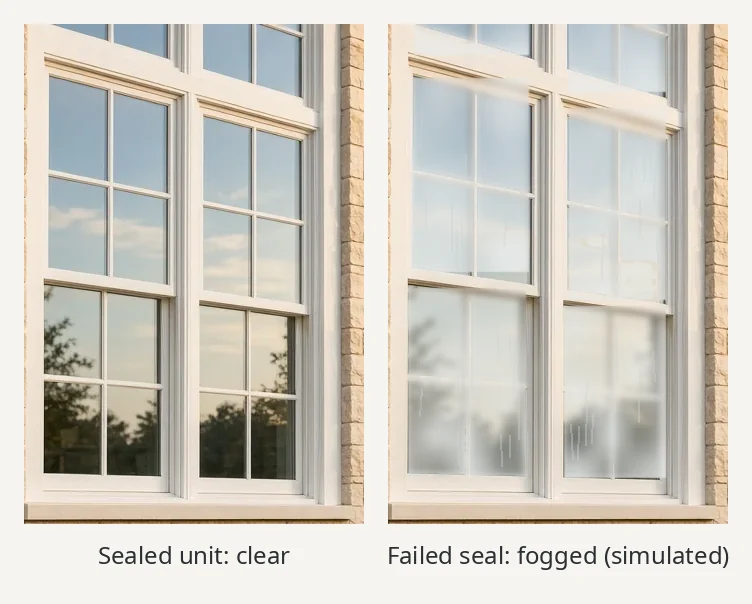
Why windows fog between the panes
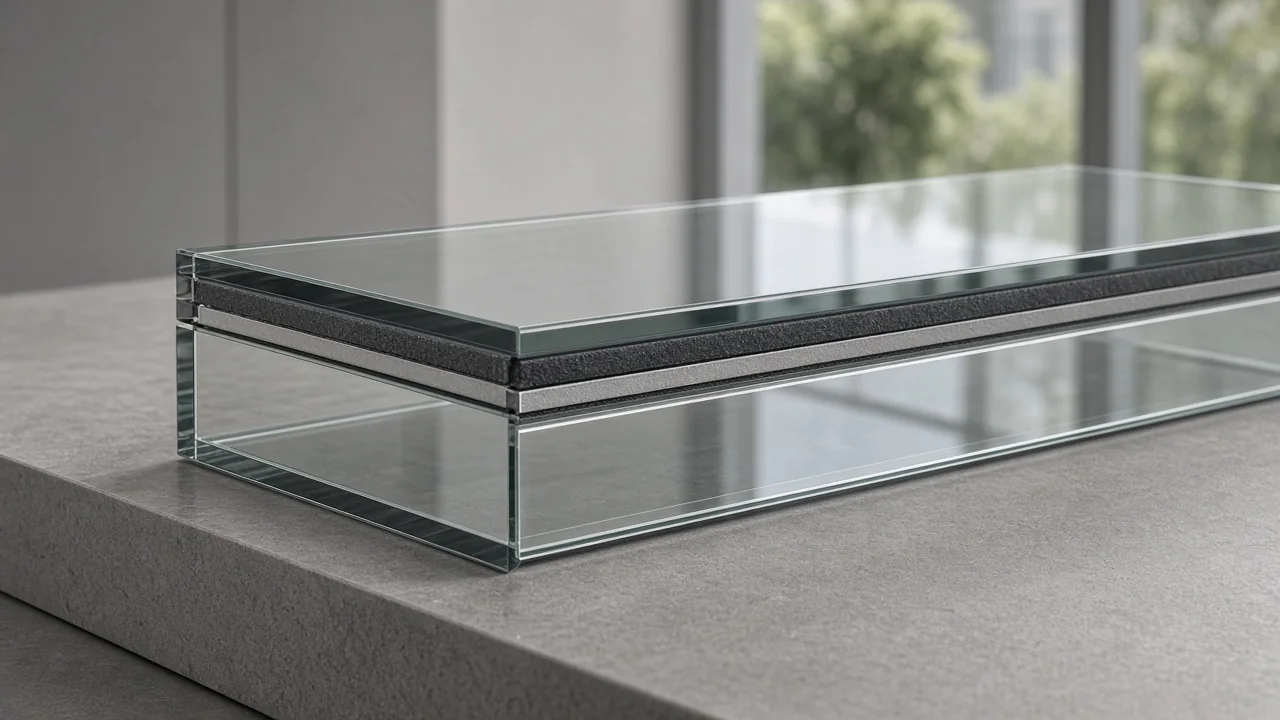
Most modern windows use an insulated glass unit (IGU): two panes of glass separated by a spacer and sealed around the edge, with dry air or argon gas between them. The spacer holds a desiccant that absorbs any trace of moisture.
Over time the edge seal can break down. Heat, direct sun, and daily temperature swings make the unit expand and contract, which stresses the seal, and Houston’s long, hot, humid summers give it plenty of that stress. Once the seal opens, humid air gets in, the desiccant saturates, and moisture condenses on the inside faces of the glass. As it dries and returns, it leaves the milky haze and streaks that make the window look permanently dirty.
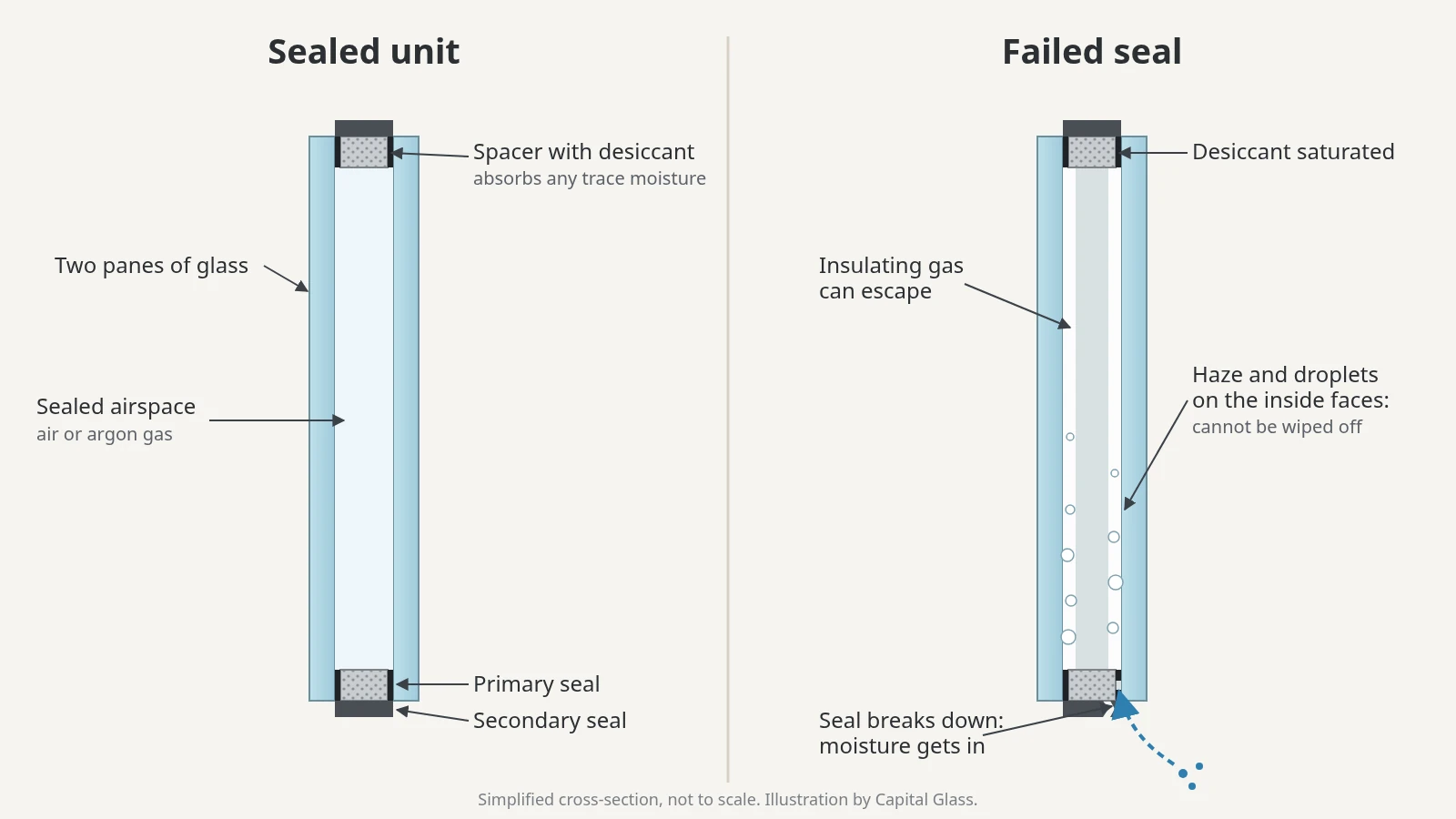 Simplified cross-section, not to scale. Illustration by Capital Glass.
Is it seal failure or ordinary condensation?
Before calling anyone, check where the moisture is:
- Wipes off on the inside of the room: indoor humidity condensing on cool glass, common in bathrooms and kitchens. Ventilation fixes it; the window is fine.
- Wipes off on the outside: dew on cool mornings, which is normal and even a sign of well-insulated glass.
- Cannot be wiped off from either side: the moisture is between the panes, and the unit’s seal has failed.
Replace the glass unit or the whole window?
| Replace the insulated glass unit | Replace the whole window | |
|---|---|---|
| What changes | The sealed glass only; the frame and sash stay | Frame, sash, glass, and hardware |
| Best when | The frame is sound and operates well | The frame is rotted, warped, cracked, or drafty |
| Disruption | Minimal; no interior or exterior trim work | Removal, new installation, trim, and finishing |
| Cost | Usually much lower | Higher, especially for many windows |
| Energy upgrade | New low-E coating and gas fill in the same frame | Full upgrade, including the frame |
Replacing just the glass unit is the right repair for most foggy windows in good frames. A new unit is made to the same size and overall thickness as the old one, so it fits the existing frame, and it can include a better low-E coating than the original glass.
 Black-framed windows in a Capital Glass residential project.
Replacing the whole window makes more sense when the problem is bigger than the glass: a wood frame with rot, a vinyl frame that is warped or cracked, sashes that no longer seal or stay open, single-pane aluminum windows, or a home where many units are failing at once and an energy upgrade is planned anyway. Our residential windows and exterior glazing service covers both.
What we check before replacing a unit
- Size and thickness. The unit’s width, height, and overall thickness, and how it is held in the sash (glazing stops, beads, or a sash that must be taken apart).
- The glass make-up. Low-E coatings, tints, and whether the original had argon gas.
- Grilles. Many windows have grilles between the panes; the new unit is made with matching grilles.
- Safety glass. Glass near doors, bathtubs, stairs, and large panes close to the floor must be tempered. A replacement in those locations must be tempered too; a tempered pane usually has a small etched mark in one corner.
- Warranty. A manufacturer name or date code on the spacer can show whether the seal is still under warranty.
Can you wait?
A foggy unit is mainly a view and appearance problem, and it does not usually let water into the house. It does mean the seal is gone, any insulating gas has likely escaped, and the haze tends to get worse over time. Replacing failed units when you notice them keeps the problem from spreading into a bigger job, and grouping several windows into one visit keeps the cost down.
For sliding patio doors with fogged glass, the same unit-versus-door decision applies; see our sliding glass doors page. For more on how glass color and coatings affect what you see, our low-iron vs. clear glass guide explains the basics.
What to send for a quote
- A photo of each foggy window, plus one close-up of a corner of the glass.
- The approximate size of each window and which room it is in.
- The window brand, if you know it, and whether the frames are vinyl, aluminum, or wood.
- Any warranty paperwork you have.
Capital Glass replaces insulated glass units and windows in homes across the Houston area. Request a window glass quote and we will tell you which windows need a new glass unit, which need more, and quote the work together.
Common questions
Can a foggy window be cleaned or defogged?
The fog is on the inside surfaces of the sealed unit, so it cannot be wiped off from either side. Some services drill and vent the unit to dry it out, but that does not restore the seal or any insulating gas, and the haze or mineral marks often remain. Replacing the insulated glass unit is the lasting repair.
How long does it take to replace an insulated glass unit?
Each unit is made to order to the exact size and thickness of the old one, so there is a lead time for fabrication. The installation itself is usually quick, often done window by window in a single visit, and the frame stays in place.
Is a foggy window covered by warranty?
Many window manufacturers warrant the glass seal for a period of years, sometimes with conditions such as original ownership or registration. Check the paperwork for the windows, or look for a manufacturer name or date code printed on the spacer between the panes, before paying for a replacement.