
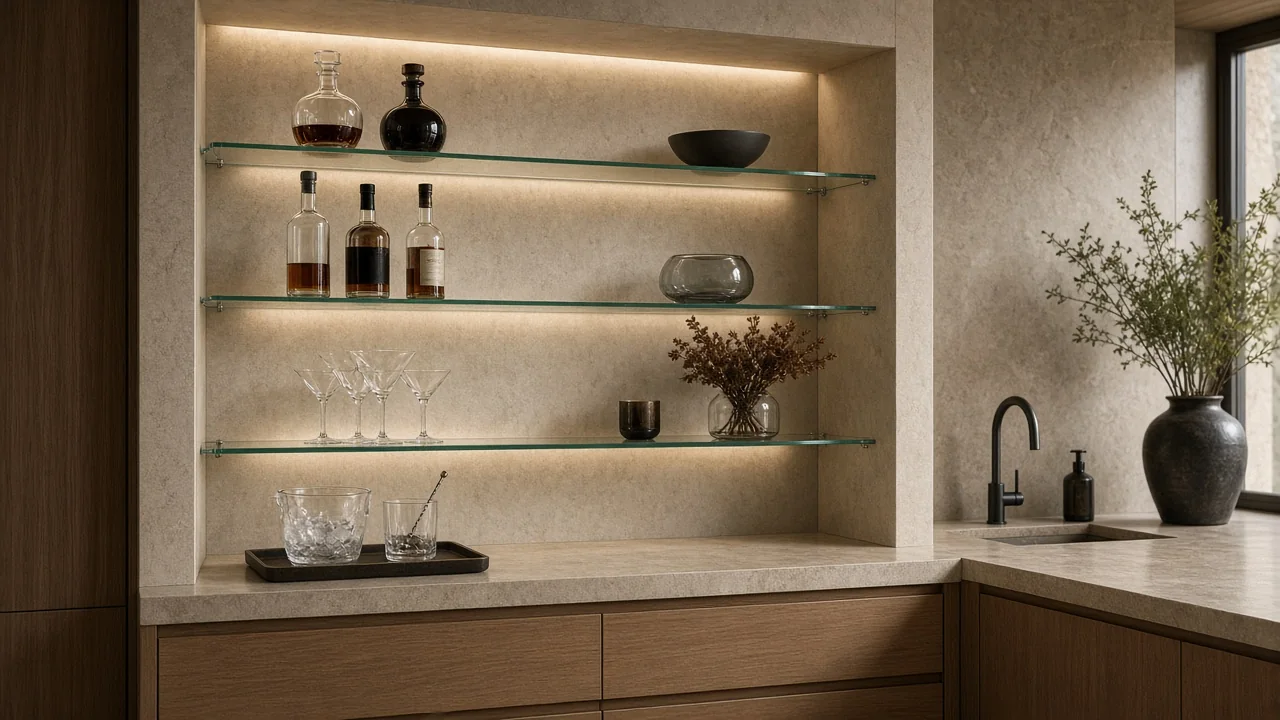
Glass shelves make a space look lighter than wood or metal shelves do. Light passes through them, objects seem to float, and a lit niche or display cabinet glows from top to bottom. They are also unforgiving if they are under-specified: too thin for the span, poorly supported, or the wrong kind of glass.
This guide covers the decisions that make a glass shelf look right and stay safe: thickness, support, safety glass, edges, and where glass shelving works best.
Choosing the thickness
The right thickness depends on three things: the span between supports, the depth of the shelf, and the weight it will carry. A shelf that is too thin for its span sags visibly and is more likely to break.
- 1/4 inch (6 mm) is typical for short, light-duty shelves: medicine cabinets, small display cases, and shelves supported on pins close together.
- 3/8 inch (10 mm) suits longer spans and everyday items such as glassware, toiletries, and folded clothing.
- 1/2 inch (12 mm) and thicker is used for long spans, heavier items, and floating shelves held only along one edge, where the glass has to carry the load on its own.
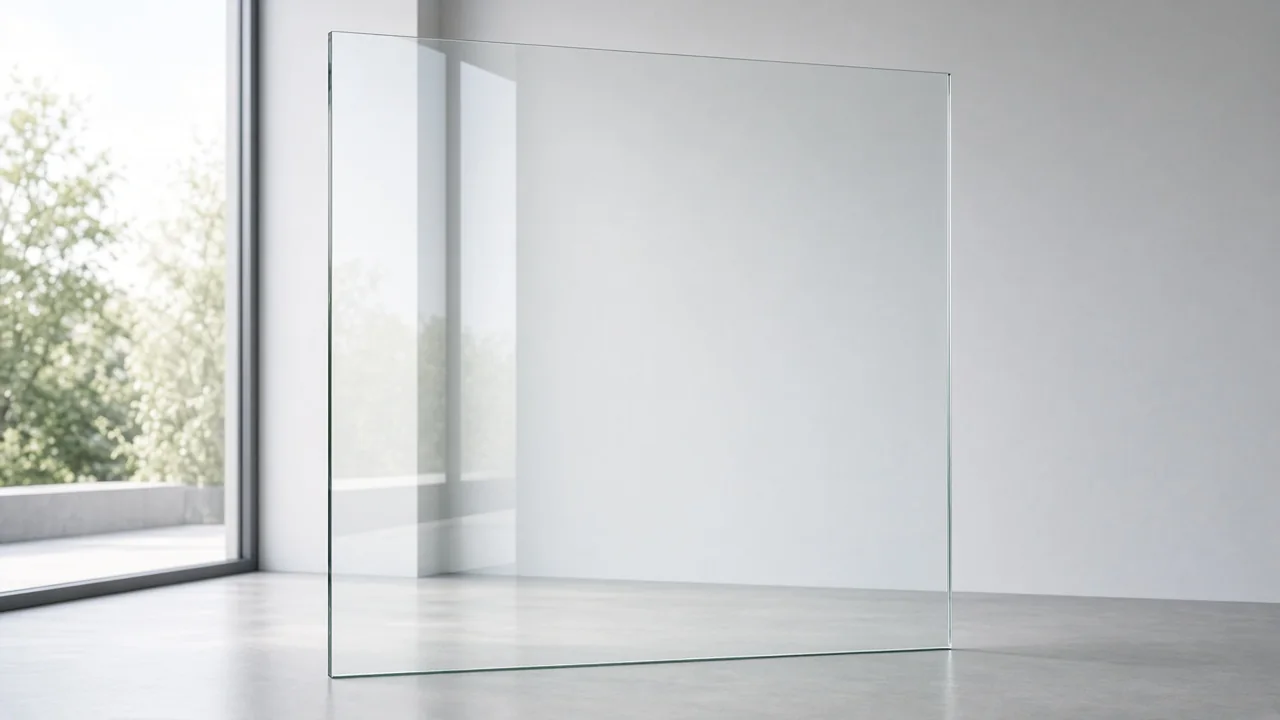
Thicker glass also shows more of the green tint of standard clear glass at the edges. For display shelving where the edges are visible and the lighting is bright, low-iron glass keeps the shelf looking colorless; our low-iron vs. clear glass guide explains the difference.
How the shelf is supported
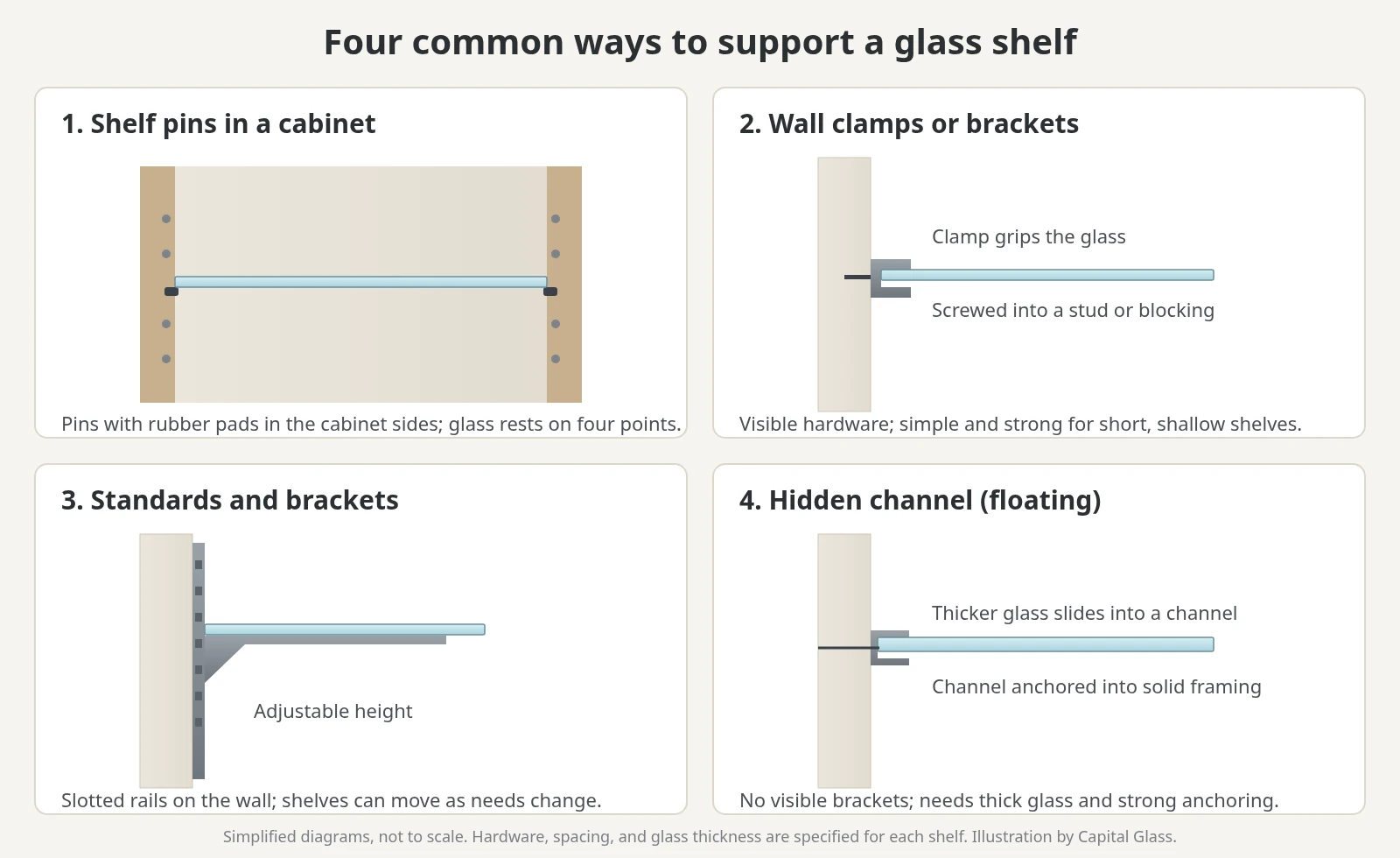 Simplified diagrams, not to scale. Illustration by Capital Glass.
- Shelf pins in a cabinet. The glass rests on four pins set into the cabinet sides, usually with rubber or plastic pads so glass does not sit on bare metal. This is the standard for display cabinets and built-ins.
- Wall clamps or brackets. Clamps grip the glass and screw into the wall. They are simple and strong for short, shallow shelves, and the hardware stays visible.
- Standards and brackets. Slotted rails on the wall take brackets that can be moved up and down, which suits closets and retail displays that change.
- Hidden channel (floating). The glass slides into a metal channel anchored to the wall framing, with no visible brackets. Floating shelves need thicker glass, shorter depths, and solid anchoring into studs or blocking, because all the load hangs from one edge.
Whatever the method, the hardware has to be anchored into something solid. Glass shelves and their contents are heavier than they look, and drywall anchors alone are not enough for a loaded shelf.
Safety glass
Tempered glass is the right choice for most shelves. It is several times stronger than standard (annealed) glass, and if it does break, it breaks into small, blunt pieces instead of long shards. That matters in closets, bathrooms, retail displays, and anywhere a shelf could be bumped.
Tempering has one practical consequence: the glass must be cut, drilled, notched, and edged to its final shape before it is tempered. It cannot be trimmed later, so every shelf is measured and fabricated to size.
Edges and corners
Every edge of a glass shelf should be finished, both for appearance and for safety:
- Flat polished edges are the cleanest look for modern shelving and show a crisp line of glass.
- Pencil polished edges are rounded and soft to the touch.
- Beveled edges suit more traditional rooms.
Exposed front corners can be eased or radiused so there is no sharp point at eye or hip height, which is worth doing on any shelf people walk past.
Where glass shelving works best
- Closets and dressing rooms. Glass shelves with lighting show shoes, handbags, and accessories without casting shadows.
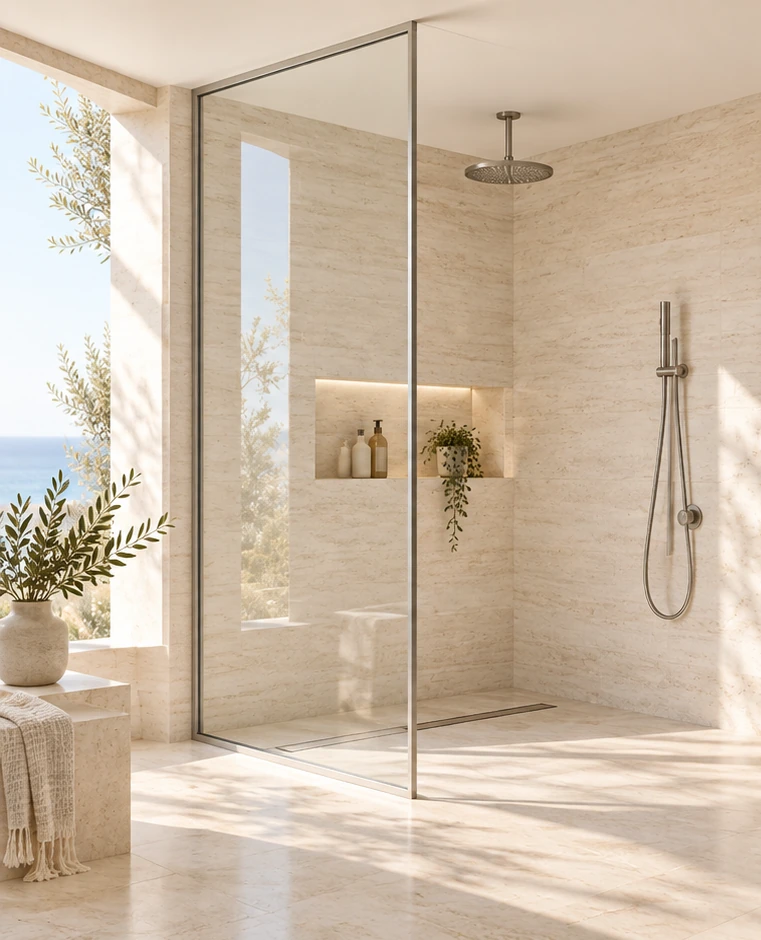
- Bathrooms. A tempered shelf above a vanity or in a shower niche is easy to wipe clean; choose hardware made for damp rooms, which matters in a humid Houston bathroom.
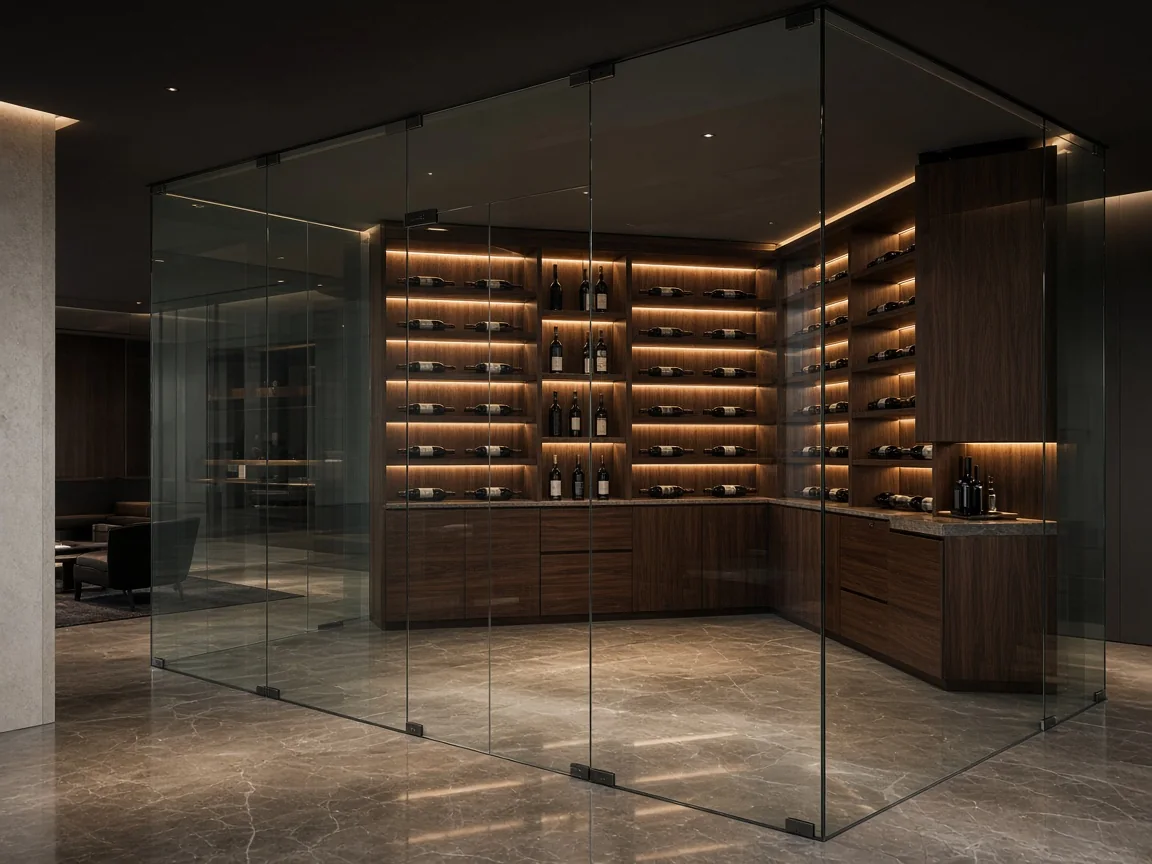
- Bars and kitchens. Glass shelving in front of a lit backsplash or inside a bar cabinet makes glassware the focal point; see our cabinet glass options for the doors in front.
- Display cases and retail. Glass shelves keep merchandise visible from every angle; commercial displays should always use tempered glass.
Installation considerations
- Measure the space, not the old shelf. Cabinet sides are rarely perfectly square, so we measure each opening and allow a small clearance.
- Plan the lighting first. LED strips and puck lights should be wired before the shelves go in, and their position affects where the supports can go.
- Mind the load. Tell us what the shelves will hold, especially anything heavy like books, stone, or bottles.
- Check the wall. Floating shelves and wall clamps need studs or added blocking behind the drywall at the right height.
For tabletops and glass covers, which follow the same thickness and edge principles, see our custom glass tabletops guide.
What to send for a quote
- The width, depth, and number of shelves, or photos of the cabinet or wall with measurements.
- What the shelves will hold.
- How you want them supported: pins, clamps, brackets, or floating.
- The edge finish you prefer and whether you want low-iron glass.
Capital Glass fabricates and installs custom glass shelving across the Houston area. Request a glass shelving quote and we will recommend the thickness, edges, and hardware for each shelf.
Common questions
Can glass shelves hold books?
They can, but books are heavy, so the shelf needs thicker glass, a short span between supports, and solid support along the back or underneath. For a bookshelf we usually recommend thicker tempered glass with more support points, or a different shelf material for very long runs.
Are glass shelves safe in a bathroom?
Yes, when they are tempered, have polished edges and rounded corners, and are mounted with hardware suited to a damp room. Keep shelves out of the swing of doors and away from where people might lean on them, and anchor the hardware into studs or blocking rather than drywall alone.
Can I cut a glass shelf to fit myself?
Standard glass can be cut, but tempered glass cannot: it must be made to its final size, with holes and notches, before it is tempered. Because most shelves should be tempered, we measure the space and fabricate each shelf to size with finished edges.