
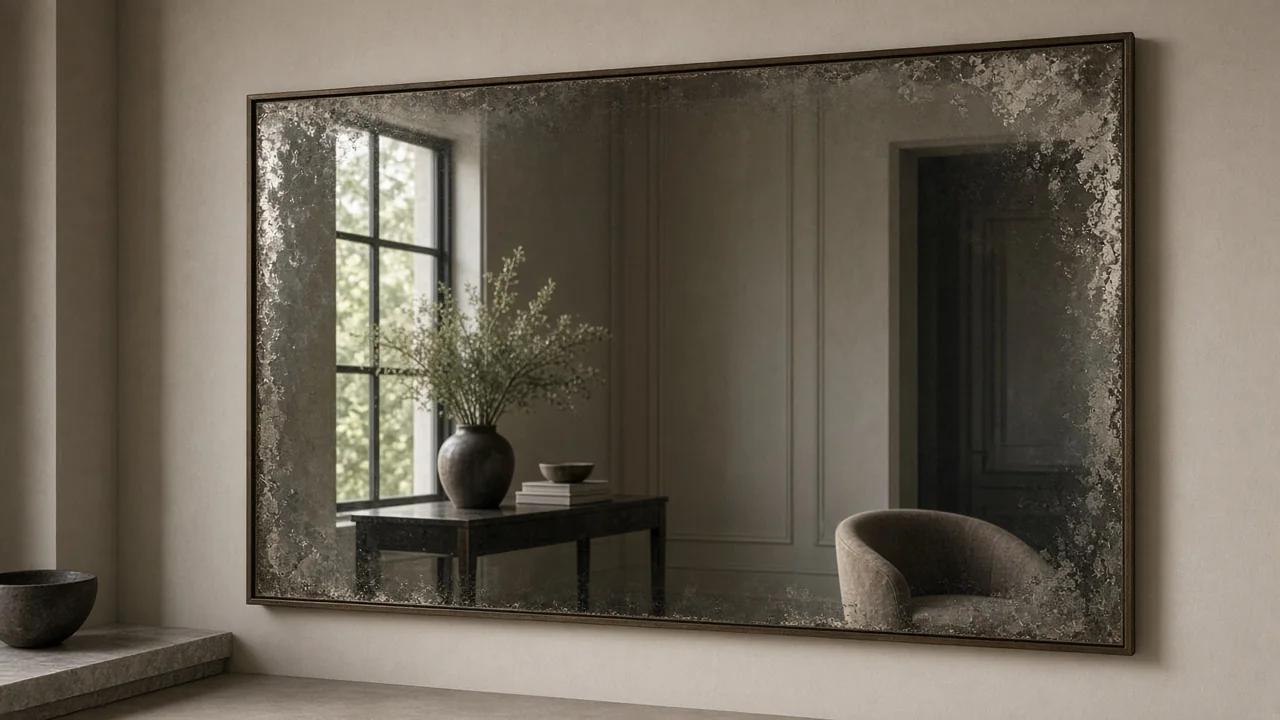
Antique mirror brings depth and warmth to a room in a way clear mirror cannot. Instead of a crisp reflection, it gives back a softened, smoky, slightly mysterious version of the space, with mottling and flecks that suggest age. It is a favorite for home bars, powder rooms, dining rooms, and Houston restaurants and lounges that want a room to feel intimate rather than bright.
This guide covers how to choose the finish, where antique mirror works best, and the details that make a mirror wall last.
How much antiquing?
Antique mirror ranges from a light haze with scattered flecks to a heavily smoked surface where the reflection is barely readable. Tint matters too: gray reads cool and modern, bronze reads warm and traditional.
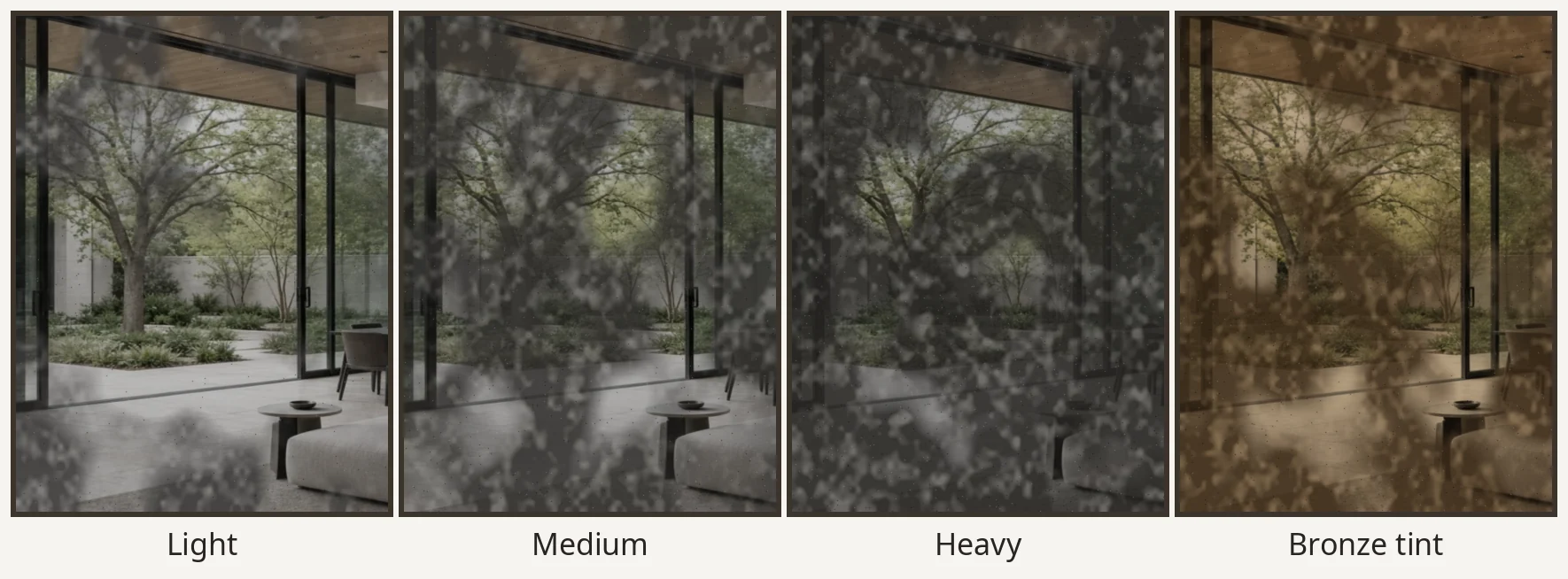 Antiquing levels and tints vary by manufacturer; choose from physical samples. Illustration by Capital Glass.
- Light antiquing keeps most of the reflection. It suits powder rooms and dining rooms where the mirror should still be usable.
- Medium antiquing is the most popular: clearly vintage, still reflective, and forgiving of smudges.
- Heavy antiquing works as a decorative surface more than a mirror, ideal for accent walls, bar backs, and ceilings of alcoves where a full reflection would be distracting.
- Bronze or gold tints warm the light and pair with brass fixtures and wood; gray tints suit black, nickel, and stone.
Because every batch is a little different, choose from a physical sample in the room’s lighting, and order a whole wall from one batch so the panels match.
Where antique mirror works best
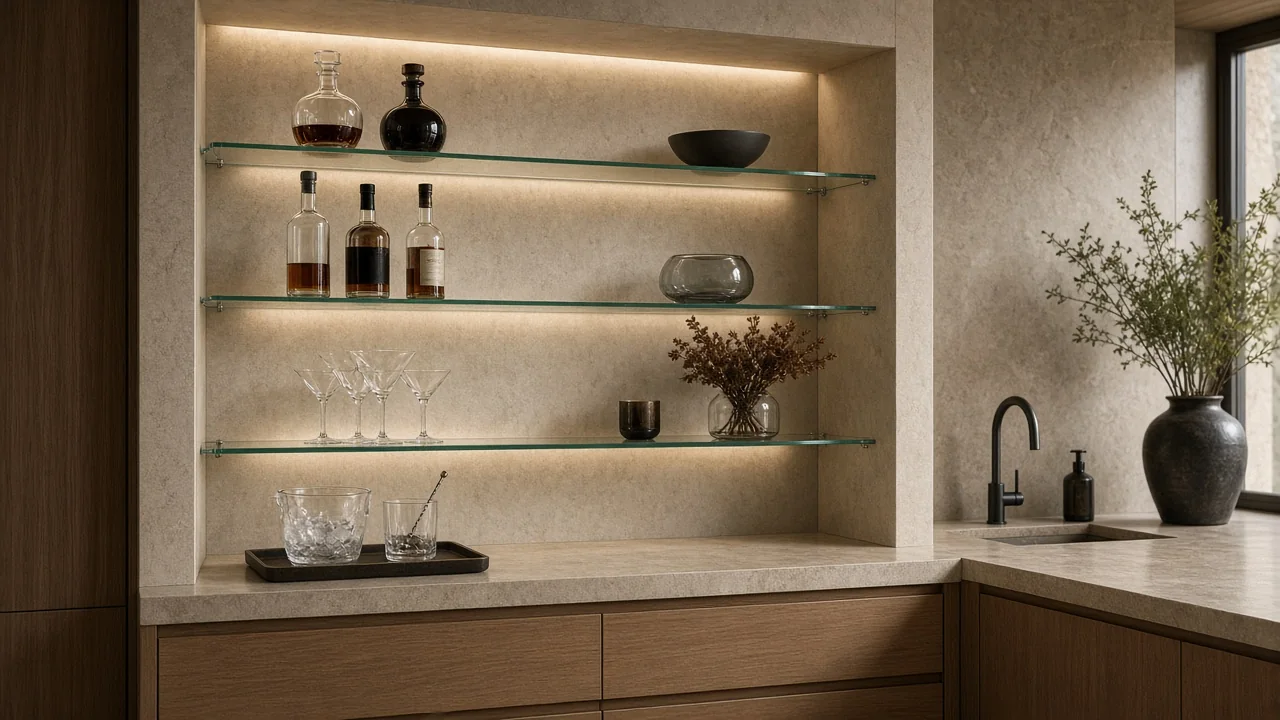
- Home bars and wine rooms. A mirror back behind the shelves doubles the glassware and bottles without the glare of clear mirror.
- Powder rooms. Antique mirror makes a small room feel deeper and more dramatic, and its pattern is kind to the light from a vanity fixture.
- Dining rooms and feature walls. A panel or a full wall adds depth and reflects candlelight and chandeliers softly.
- Restaurants, bars, and lounges. Antique mirror is a classic for bar backs, banquette walls, and columns, where it hides wear and keeps a room intimate. Commercial spaces also need durable mounting and easy cleaning.
- Cabinet doors and furniture. Small antique mirror inserts in cabinet doors or furniture add the same look at a smaller scale.
Layout: one sheet or panels
A single large sheet gives the cleanest look, but the size is limited by what fits through the doors and up the stairs, and by the largest panel the glass can be made in. Larger walls are laid out as panels:
- Butt-jointed panels with polished edges give a near-continuous surface; joints are placed where the eye expects a line.
- Beveled panels in a grid are the traditional antique look, especially in bars and restaurants, and the bevels catch the light.
Outlets, switches, and sconces that fall inside the mirror are located on a template and cut out before the mirror is installed.
Lighting
Antique mirror changes with the light more than clear mirror does. Warm light at a low angle, such as wall sconces, picture lights, or LED strips above or below the mirror, brings out the depth of the mottling. Strong overhead light flattens it. If the mirror is behind a bar, plan the shelf lighting at the same time as the mirror.
Mounting
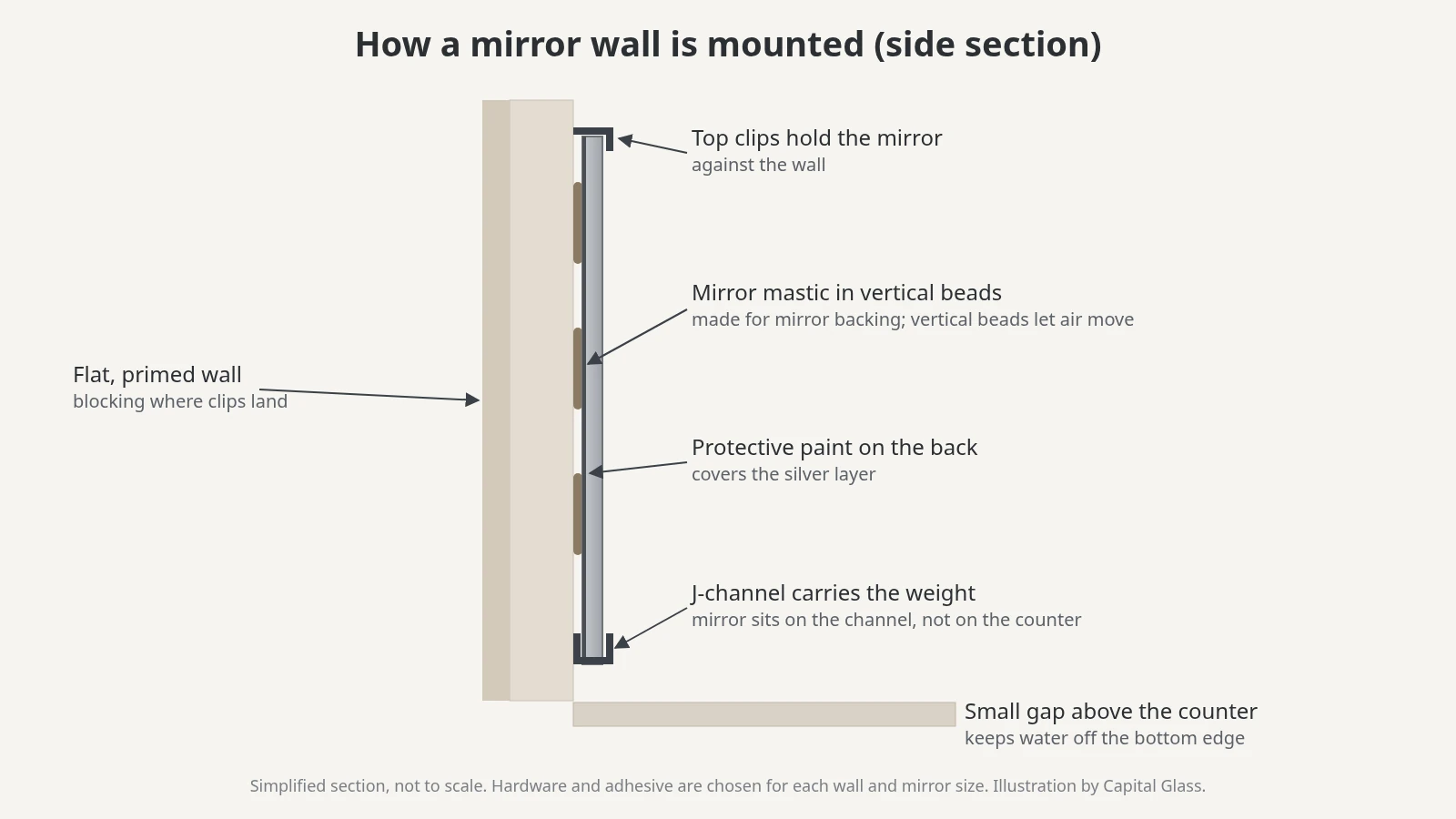 Simplified section, not to scale. Illustration by Capital Glass.
- A flat, primed wall. Mirror shows every wave in the wall, so the substrate must be flat; blocking behind the drywall gives the clips something solid.
- Mastic made for mirrors, applied in vertical beads. Ordinary construction adhesives can attack the protective paint and darken the silver.
- A J-channel or clips at the bottom carries the weight, so the adhesive is not holding the mirror alone.
- A small gap above counters, so water does not wick up into the edge.
In restaurants and other public spaces, safety backing film on large panels holds the glass together if it is struck, and the mounting is chosen for the size and location of each panel.
Humidity and care in Houston
Houston humidity is the main threat to any mirror, and the edge is where it gets in. Keep antique mirror out of direct water, protect the edges near sinks, run exhaust fans in bathrooms, and clean by spraying the cloth rather than the glass. Our custom mirror guide covers mirror care and mounting for vanities and gyms in more detail, and clear mirror remains the better choice where a true, bright reflection matters.
What to send for a quote
- The wall dimensions and photos of the wall and the path into the room.
- The level of antiquing and the tint you like, or a sample.
- Single sheet or panels, and polished or beveled edges.
- The location of outlets, switches, and lights inside the mirror area.
- For restaurants and bars, the drawings and the schedule.
Capital Glass fabricates and installs antique mirror walls for homes and businesses across the Houston area. Request a mirror quote, or for restaurant and commercial interiors, invite Capital Glass to bid.
Common questions
What is antique mirror?
Antique mirror is new mirror glass whose silver layer has been treated to look aged: smoky, mottled, flecked, or veined, often with a gray or bronze tint. It reflects the room in a softer, darker, more forgiving way than clear mirror, which is why it is popular for bars, powder rooms, and restaurant walls.
Is antique mirror harder to keep clean?
It is easier to live with than clear mirror, because the pattern hides fingerprints and water spots. Clean it the same way as any mirror: spray a mild cleaner on the cloth, not on the glass, and keep ammonia and vinegar away from the edges, where they can attack the silver backing.
Can antique mirror go behind a bar or in a bathroom?
Yes, with care. Behind a bar or in a powder room it works well. In a full bathroom it should stay out of direct water and away from the shower, with protected edges and a small gap above any counter, because moisture at the edge is what makes mirror silver deteriorate.